About this set: compiled and lightly cleaned up from real test material that test-takers recalled. IELTS draws from a global question pool, so this material circulates worldwide. To give you a complete, sittable test, material reported around the same period is assembled together — so a set may combine content from several exam dates, not one single sitting. Any audio is a recreation for practice. Organized for study convenience. Based on test-taker recalls — not official IELTS material.
Reading Passage 1: The Burgess Shale fossils: Fauna vanished with a whimper, not a bang
- 1
The Burgess Shale became widely known to the public because of Gould's book.
- 2
Charles Walcott had to get permission from Canadian authorities to gain access to the fossil site.
- 3
The Burgess Shale includes impressions of soft and hard body parts.
- 4
The Burgess Shale creatures were land animals.
- 5
Researchers now believe that Hallucigenia is unrelated to any modern creature.
- 6
Burgess Shale was formed following a time called the ________.
- 7
Charles Walcott learnt of the fossil finds from people building a ________.
- 8
A researcher looked at Burgess Shale findings again in ________.
- 9
Peter Van Roy believes that discoveries in Morocco show that the ________ of complex life forms continued.
- 10
Opabinia: tail resembling a ________.
- 11
Opabinia: claws used to hold ________.
- 12
Nectocaris: looked like a ________.
- 13
Hallucigenia: spines used to ________.
Reading Passage 2: Intelligent Behaviour in Birds
- 14
Paragraph A
- i. The theory linking capacity for tool use in birds and survival
- ii. The influence of humans on tool use
- iii. The theory linking cognitive ability and living in a society
- iv. Reviewing long-held beliefs
- v. Intelligence helps birds to remember
- vi. How some birds trick each other
- vii. Physiological evidence of birds' intelligence
- viii. Several examples of birds that use tools
- ix. One species' multiple tool-using techniques
- 15
Paragraph B
- 16
Paragraph C
- 17
Paragraph D
- 18
Paragraph E
- 19
Paragraph F
- 20
Paragraph G
- 21
keeping tools that they like to use
- A. White-winged choughs
- B. Black kites
- C. New Caledonian crows
- 22
drawing out their prey by frightening it
- 23
the use of tools to remove the outer covering from food
- 24
using food to attract their prey
- 25
the use of unfamiliar materials to make tools
- 26
engaging in certain activities for the benefit of observers
Reading Passage 3: New Zealand Seaweed
- 27
Section A
- i. Locations and features of different seaweeds
- ii. Various products of seaweeds
- iii. Use of seaweeds in Japan
- iv. Seaweed species around the globe
- v. Nutritious value of seaweeds
- vi. Why it doesn't dry or sink
- vii. Where to find red seaweeds
- viii. Underuse of native species
- ix. Mystery solved
- x. How seaweeds reproduce and grow
- 28
Section B
- 29
Section C
- 30
Section D
- 31
Section E
- 32
Section F
- 33
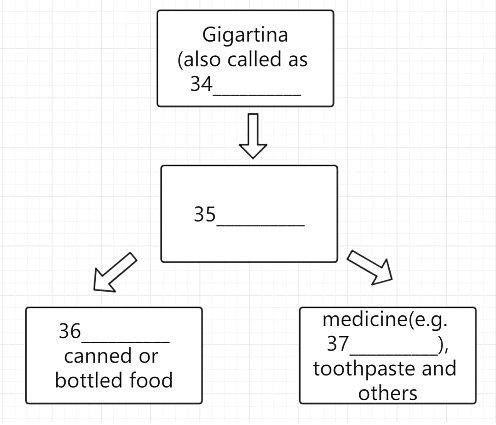
Flow-chart completion (diagram not machine-extractable from source PDF) - blank 34.
- 34
Flow-chart completion (diagram not machine-extractable from source PDF) - blank 35.
- 35
Flow-chart completion (diagram not machine-extractable from source PDF) - blank 36.
- 36
Flow-chart completion (diagram not machine-extractable from source PDF) - blank 37.
- 37
Can resist exposure to sunlight at high-water mark
- A. Green seaweeds
- B. Brown seaweeds
- C. Red seaweeds
- 38
Grow in far open sea water
- 39
Share their habitat with karengo
Answer sheet
Fill in as you go — checking is instant and local, and every miss lands in your mistake log with the lesson that fixes it.
- 1.
- 2.
- 3.
- 4.
- 5.
- 6.
- 7.
- 8.
- 9.
- 10.
- 11.
- 12.
- 13.
- 14.
- 15.
- 16.
- 17.
- 18.
- 19.
- 20.
- 21.
- 22.
- 23.
- 24.
- 25.
- 26.
- 27.
- 28.
- 29.
- 30.
- 31.
- 32.
- 33.
- 34.
- 35.
- 36.
- 37.
- 38.
- 39.
Show answer key
Answer key
1. TRUE
2. NOT GIVEN
3. TRUE
4. FALSE
5. FALSE
6. Cambrian explosion
7. railway
8. 1979
9. evolution
10. fan
11. food
12. leech
13. move
14. iv
15. viii
16. i
17. ix
18. vii
19. iii
20. vi
21. C
22. B
23. A
24. B
25. C
26. A
27. v
28. ii
29. viii
30. i
31. x
32. vi
33. New Zealand carrageen(s)
34. agar
35. seameal
36. cough mixture
37. A
38. C
39. B