Rebuilt from test-taker recalls — not official IELTS material. Audio and passages are recreations for practice.
Show transcript
====================
IELTS Listening Transcript
====================
PART 1
Speaker 0: Section one.
Speaker 0: You will hear a conversation between a customer service representative and a customer who demands a full refund.
Speaker 0: First, you have some time to look at questions one to four.
Speaker 0: You will see that there is an example which has been done for you.
Speaker 0: On this occasion only, the conversation relating to this will be played first.
Speaker 1: Hello, and welcome to Under Pressure Enterprises customer service department. This is Kelly. How may I help you?
Speaker 2: Yes. I'm calling about one of your rice cookers I just purchased.
Speaker 0: The customer says that he is calling about one of the rice cookers he just purchased. So rice cooker has been written in the space.
Speaker 0: Now we shall begin. You should answer the questions as you listen because you will not hear the recording a second time.
Speaker 0: Listen carefully and answer questions one to four.
Speaker 1: Hello, and welcome to Under Pressure Enterprises customer service department. This is Kelly. How may I help you?
Speaker 2: Yes. I'm calling about one of your rice cookers I just purchased.
Speaker 1: What seems to be the problem, sir?
Speaker 2: Seems? There's no seeming about it. The blasted thing shoots hot steam all over the place, that's what. It nearly scalded my hand when I went to open it. Why, it could have killed the cat or something. It could have exploded and killed my wife and me.
Speaker 1: Sir, sir, please calm down. As long as the steam escapes the cooker, it won't explode.
Speaker 2: So you're telling me there's no problem? Are you calling me a liar?
Speaker 1: Sir, no one is calling you a liar.
Speaker 2: Yes. So I demand a full refund.
Speaker 1: Under pressure, we'll be happy to refund your money, sir. Now I just need some basic information.
Speaker 2: Okay. Okay. Sorry. I do tend to get a little hot under the collar. My wife tells me to slow down. So what do you need to know?
Speaker 1: Sir, don't worry. I just need to ask you the model number of the cooker.
Speaker 2: Where are my glasses? Ah, here. Let's see. Ah, it's R242.
Speaker 1: R242. Okay. And how much did you pay for the product?
Speaker 2: £89.99. It was on sale. I guess I should tell you.
Speaker 1: Thank you. That's honest of you. Now where did you buy the cooker? Which store and which branch?
Speaker 2: At that big electric life appliance store downtown.
Speaker 1: The city center branch?
Speaker 2: That's the one.
Speaker 1: And you say the problem is that the steam escapes?
Speaker 2: Yes. It does.
Speaker 1: No problem, sir. If there's steam escaping, clearly, the cooker is broken or defective. So we have an R242 cooker with an escaping steam problem. It was bought from Electric Life City Center branch for £89.99. Is that correct?
Speaker 2: Yes. That is correct. Oh, I nearly forgot. When did you buy the cooker?
Speaker 2: Just as soon as my wife got the crazy idea, she'll live longer if she stops eating good English food, roast beef, and mash. No. All she says she wants is rice and vegetables and sauces you'd not soak your feet in.
Speaker 0: Before you hear the rest of the conversation, you have some time to look at questions five to 10.
Speaker 0: Now listen and answer questions five to 10.
Speaker 1: Sir, sir, when did you buy it?
Speaker 2: Oh, there I go again. Let's see. We bought it just six months ago. We hardly use it either. But six months, is that too long? I mean, for the warranty.
Speaker 1: Very well. That's well within the warranty period. Now what's your name and address?
Speaker 2: Name and address? What for?
Speaker 1: Sir, it is company policy. If you want your money, you must inform me.
Speaker 2: Money, you say? Oh, my name is Herbert Hewitt, and my address is 84 Park Road.
Speaker 1: Is that here in Coventry?
Speaker 2: Yes. The postal code is B0241DJ, but I don't think sending things in the mail is very secure or very efficient.
Speaker 1: I mean Don't worry, Mister Hewitt. Don't worry. We can credit the money to your credit card. You do have one, don't you?
Speaker 2: Yes. That's how we paid for the cooker.
Speaker 1: Oh, yes. We still have the number on the computer. I only need to ask your card's expiry date.
Speaker 2: I'm afraid I never give that sort of information out. I mean, once you have that, anyone could go charging things and
Speaker 1: Sir, said your expiry date, not your card's password.
Speaker 2: Oh, yes. Foolish me. Of course. You didn't say password. Let's see. That will be April 2008.
Speaker 1: April 2008. Very well. Your card still has nearly two months left to go. We'll get that refund right to you probably by 05:00 this evening.
Speaker 2: You had better. If I don't get my money wait. Wait. Yes. I know I'm losing my temper again. I really am sorry. I haven't had my medicine today.
Speaker 1: And, sir, just one more question for our records. How often do you go shopping at the city center branch?
Speaker 2: Oh, well, it's hard to say. I suppose maybe once a month. But I can tell you this. If I don't get my refund, I'll never shop there again.
Speaker 1: I think it's time to start looking for another job.
Speaker 0: That is the end of section one. You now have half a minute to check your answers.
Speaker 0: Now turn to section two.
PART 2
Speaker 4: Part two.
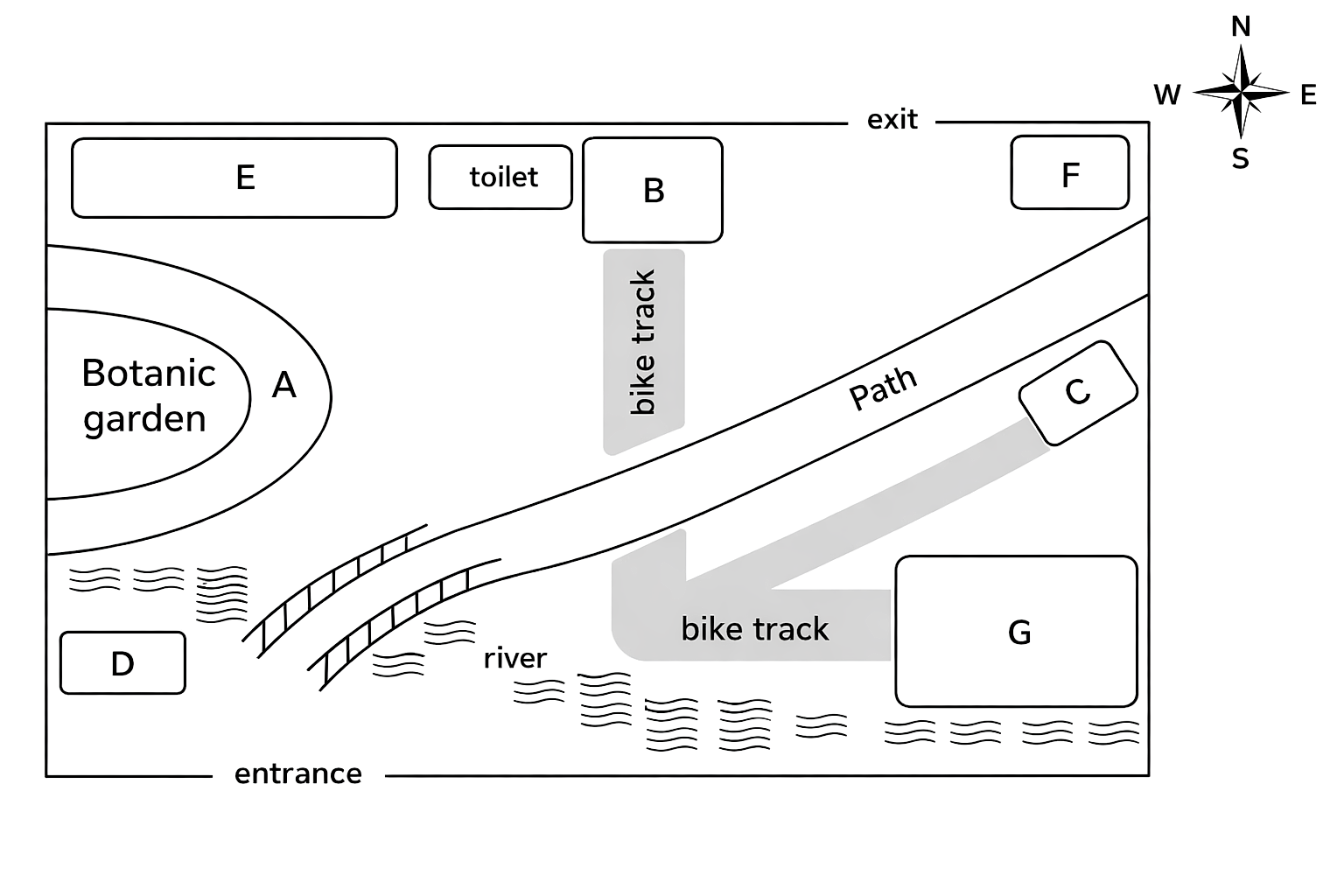
Speaker 4: You will hear a man talking to a group of people about the Melbourne Zoo.
Speaker 4: First, you have some time to look at questions 11 to 15.
Speaker 4: Now listen carefully and answer questions 11 to 15.
Speaker 3: Good day, everyone. Welcome to the Melbourne Zoo. My name's Mark, and I'd like to welcome you today. If you have a moment, I'd like to give you some information about our zoo before you enter. Please feel free to ask me any questions at the end of my talk. As you know, it's November now, and that means longer days. I have some good news for you. Anyone who hates getting up early in the morning can now enter the zoo after dinner. Because of the time of year, we are offering a two hour mini tour after 7PM. Seeing the animals at a different time of day will be a fascinating experience for many of you, and I encourage you to sign up. Unfortunately, due to a fire last month, we no longer allow bonfire nights. By the way, we have been planning two parties for Christmas next month. We'll post the details on our website. It should be a lot of fun.
Speaker 3: So let me tell you a little about our residents here at the zoo. Despite what was recently reported in the media, the most popular animal around here is not the kangaroo or even the sheepdog. No. Our star animal here is without doubt the koala. They are sedentary creatures and can sleep for up to twenty hours a day, so you'll have to keep an eye out for them. You should be able to spot some of them in the treetops hiding behind branches. But if you're lucky, you might see one run across your path. Of course, we do have kangaroos. They are truly fascinating creatures. It might interest you to know that they are the only large animals that use hopping as a means of locomotion. They are generally very friendly. And while we have no problems with people feeding them, we always tell our guests that it's important to stand with an upright posture when giving them food. The kangaroos may interpret you bending over as a sign of aggression, so please be careful. Also, no matter how cute the babies are, any physical contact should be avoided. The adults are quite protective of their young while they are still in the pouch, so please refrain from the urge to give them a pat. They aren't greedy animals and will generally stop eating once they are full. So if you have some extra food, you might need to find another one to feed.
Speaker 3: As you may have heard, our wild dog pen is temporarily closed, but it should reopen soon. You'll be happy to know that our dogs are all fine and in good health, and I think they are quite excited about their new home. Right now, we are fixing the fences. They are wild animals after all, and we need to consider public safety before opening the exhibit. But please come back to see them when we are finished.
Speaker 3: Speaking of return visits, if you enjoy our zoo and want to come back, you may be interested in getting a discount ticket. We used to sell them at the entrance of the zoo as well as on our website, but the website is currently under maintenance. So the coupons are available only at the cafe near the gift shop for this year. So if you're interested, make your way over there once you are ready. Be informed. There are a lot of tourists around today, so the earlier, the better.
Speaker 4: Before you hear the rest of the talk, you have some time to look at questions 16 to 20.
Speaker 4: Now listen carefully and answer questions 16 to 20.
Speaker 3: Now if I can bring your attention to the map of our zoo, I'll provide a brief description of the grounds so that no one gets lost. If you'd like to see some of our animals up close, then you should visit one of our shows in the arena. We have a show every half hour, so you're sure to see something. We are at the entrance. To get there, cross the bridge and go straight to the end of the path, and you'll find it to your right. For those who are looking for a quieter place to learn about the history of our zoo, in the north of the zoo, we have an educational hall ready for you. It's easy to find just to the west of the toilets. With such beautiful weather right now, I know many of you would love to spend the afternoon having a picnic. There is a great spot for you in the zoo. It's the area surrounding the Botanic Garden, and it's also facing the river. The view is fantastic there.
Speaker 3: Some of you may recall that our photo printing site was in the northeastern corner of the zoo. It has now been moved to the building next to the bridge. Finally, I'm sure you've noticed that it's quite warm today. If you're not up for walking, don't worry. We have bike sheds at different locations across the zoo, and the bikes are free for our guests. So just grab one and take it for a ride. Once you've got your bike, it's only a five minute ride to the gift shop, and the exit is just beside it. You can't miss it. Please note that cycling is only permitted on the designated paths.
Speaker 3: Alright. That is the end of my talk. I hope you have a great time visiting all the animals. Take as many pictures as you like, and don't forget to share them with your friends. Now does anyone have any questions?
Speaker 4: That is the end of part two. You now have thirty second.
PART 3
Speaker 5: Now turn to section three on page five.
Speaker 5: Section three.
Speaker 5: You will hear two law students called Eleanor and Jamie discussing their work on whether the evidence given by people who witness crimes is reliable.
Speaker 5: First, you have some time to look at questions 21 to 26 on page five.
Speaker 5: Now listen carefully and answer questions 21 to 26.
Speaker 6: Hi, Jamie. I've just been reading this book about eyewitness testimonies. It really goes into how much we can actually rely on what the people who witness crimes actually say, and what things influence eyewitness reliability.
Speaker 7: Oh, I've read a couple of case studies on that too. Can we compare notes?
Speaker 6: Good idea. It's fascinating to learn that eyewitness identification is such compelling evidence in both civil and criminal trials.
Speaker 7: You mean if a witness says something, generally they're believed?
Speaker 6: And reading between the lines, I'd say that when a witness gives evidence in a very self assured way, everyone takes them at their word. Whether they're a doctor who speaks with an assumed authority, or the average person in the street, it doesn't seem to matter as much as their manner.
Speaker 7: Right. So is that textbook worth reading?
Speaker 6: Yes. It's a good book, divided into user friendly sections. It refers to case studies, and the conclusions are clearly underlined.
Speaker 7: But actually, some of the cases are more than ten years old now.
Speaker 6: Well, it's the same problem with the survey reports our tutor gave us.
Speaker 7: But at least they draw on a representative sample. That's good.
Speaker 6: All the books point out that eyewitness statements are very often unreliable. But there can be good reasons for that, like an incident may happen at night in the dark.
Speaker 7: Or it happened some way away. But it's the fact that it can happen in just a split second that makes the witness's account so unreliable.
Speaker 6: That point's made very strongly in what I've read too.
Speaker 7: Yeah.
Speaker 6: Have you read anything about photo identifications?
Speaker 7: Yes. About the procedure and the reliability of witnesses looking at photos of different people and picking out the suspect. The case studies all clearly show how easy it is to sway a witness's choice of photo, even just by the flicker of an eye. But steps have been taken now to avoid this happening.
Speaker 6: And are the witnesses told exactly what they have to do?
Speaker 7: Mostly. But the trouble is, most people focus on the photos and choose the most likely suspect from the bunch, and forget about the actual incident and who they saw at the time. And I read something about a naive observer.
Speaker 6: Do you know what that is? Is it a witness who's never been in a court before?
Speaker 7: Oh, I understood it to mean someone who's had nothing to do with the event, and they're asked to look at the photos and pick out the potential suspect.
Speaker 6: That figures. Then they can see if the photos are a good set and make sure one person doesn't stand out.
Speaker 7: Another thing I read was that witnesses don't like to change their minds once they've made a particular statement.
Speaker 6: I thought people might worry about the fact that they told a lie in court and think they might be punished in some way.
Speaker 7: But it's simply that they're afraid of seeming unintelligent or lightweight.
Speaker 6: Yeah. People are reluctant to lose face. Imagine if a case had been going on for weeks and you suddenly realized you'd got something wrong right at the beginning.
Speaker 5: Before you hear the rest of the discussion, you have some time to look at questions 27 to 30 on page six.
Speaker 5: Now listen and answer questions 27 to 30.
Speaker 6: Changing the topic slightly, can I just check with you what you've understood about the problems of interviewing child witnesses when they've witnessed, for example, robbery?
Speaker 7: Yes. Did you get the handout about the stages that should be followed when children are interviewed?
Speaker 6: Yes. The rapport stage, when a relationship between the child and the interviewer is built up, seems to be crucial. But many children fail to say anything that provides any real information.
Speaker 7: It must be hard for them not to feel a bit scared about being in a formal setting like a court building. Still, it's a good lead in to open ended questions,
Speaker 6: where the interviewer carefully sticks to their prepared questions in order to remain neutral. I can see the point of that, but the handout discusses the issue of children simply not understanding the specialist language used, so the whole interview just gets more puzzling for them. I think the stage called closed questions is easier for children to handle.
Speaker 7: They just have to answer yes or no. But everything's not so clear cut in a child's world, and abstract concepts such as honesty haven't been fully grasped by young children.
Speaker 6: You mean they make things up?
Speaker 7: Apparently. And in the final stage, closure, where the interviewer has to check anything that hasn't been made clear to them by repeating previous questions,
Speaker 6: children often become suspicious of the questioner. It must require lots of training to be able to interview children successfully.
Speaker 8: Yes.
Speaker 5: That is the end of section three. You now have half a minute to check your answers.
PART 4
Speaker 9: Part four.
Speaker 9: You will hear part of a geography lecture about rubber production.
Speaker 9: First, you have some time to look at questions 31 to 40.
Speaker 9: Now listen carefully and answer questions 31 to 40.
Speaker 8: Good morning. In this module, we've been looking at the production of some of the world's most important raw materials. And today, it's the turn of rubber.
Speaker 8: Traditionally, natural rubber was produced on small holdings. And in case you're not familiar with the process, I'll just describe it briefly. The first stage in the process, known as tapping, involves making an incision in the rubber tree and removing a thin layer of bark. This procedure has to be done very carefully with a special knife because if the incision is too deep, the tree will be damaged, and a white liquid known as latex starts to ooze out. Next, the tapper attaches a cup to the tree made out of something simple like a coconut shell to collect it. Tapping is usually started in the early morning because the coolness encourages the latex to flow easily. Later in the day, the tapper goes back to each tree to get the latex and take it to what you might call the factory, although the procedures that take place in it are relatively simple. Here, it is poured into a mold, and then formic acid is added to it, and the mixture's left for a few hours. The purpose of the formic acid is to thicken the liquid latex. So after some time, the latex is transformed into a solid block of rubber. This block of rubber is then pressed manually to turn it into a thin sheet. And then when it's thin enough, the rubber sheet is fed through a mangle. And I should point out that apart from this, no other machinery is used in the process. It's fairly simple. Just a frame with two rollers and a handle to turn them. The procedure is repeated several times to get rid of as much water as possible. And finally, these sheets are taken to a special smoke room where they are dried. And you're then left with what are by now sheets of brown rubber. These are then sold to traders who collect them from villages and sell them on in turn.
Speaker 8: Well, that's the process then. Now just a little bit about the history of rubber. Rubber was in use in America long before it became commercially important. The rubber tree was a native of Brazil, and there's an account from as long ago as fifteen twenty five of people in Mexico playing with rubber balls. But it wasn't until the nineteenth century that Europeans recognized the usefulness of the substance chiefly for clothing. Various attempts were made to improve the properties of rubber. One of the key discoveries was of a process known as vulcanization, which involved heating the rubber and adding sulfur to it. And the result was a substance that had a lot more strength and was also more elastic, making it suitable for a variety of uses. But the thing that gave demand for rubber a real boost was the expanding automobile industry at the end of the nineteenth century and the invention of car tires. During the twentieth century, rubber became so important that there were various attempts to develop a synthetic version. But none of them resulted in a product that was able to compete with natural rubber until Germany developed a successful substitute when its supplies of the natural substance were cut off during the First World War. Later, this was accelerated when the American government built its own rubber factories. So in economic terms, rubbers had an outstanding position in the global market for more than a hundred years.
Speaker 0: That is the end of part four. You now have one minute to check your answers to part four.