Về bộ đề này: tổng hợp và chỉnh sửa nhẹ từ các đề thật mà thí sinh recall lại. IELTS lấy đề từ ngân hàng câu hỏi toàn cầu, nên tài liệu này được lưu hành rộng rãi. Để bạn có một đề hoàn chỉnh, các phần được báo cáo cùng thời điểm sẽ được ghép lại — vì vậy một bộ có thể gồm nội dung từ nhiều ngày thi, không chỉ một buổi. Audio nếu có cũng là bản tái hiện để luyện tập. Sắp xếp thuận tiện cho việc học. Dựa trên ký ức thí sinh — không phải tài liệu chính thức của IELTS.
Reading Passage 1: Jethro Tull (1674-1741) - Inventor of the Seed Drill
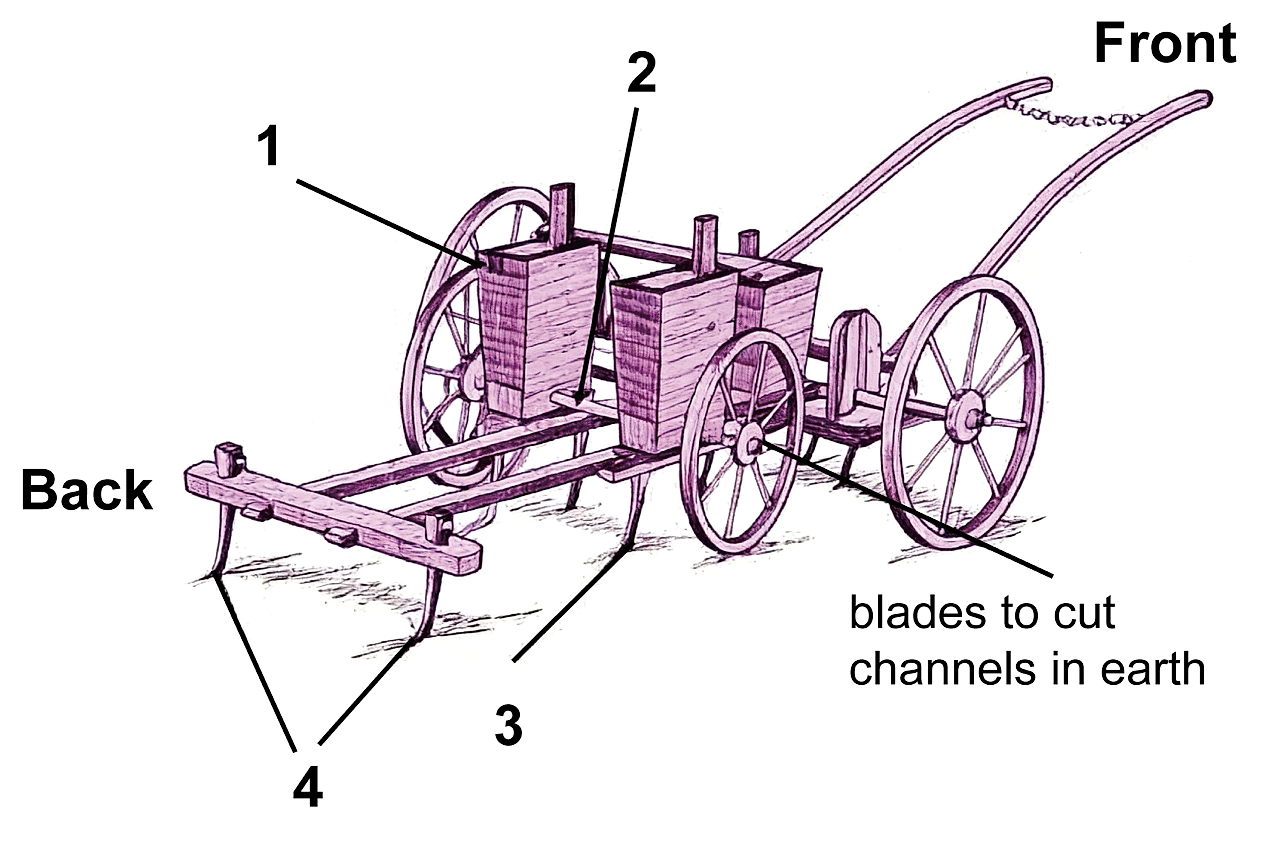
- 1
________ containing seeds
- 2
________ which turns as wheels move
- 3
________ through which seed passes into channels
- 4
________ to distribute earth over seeds
- 5
What name was given to the traditional technique of seed-sowing?
- 6
What type of agriculture gave Tull inspiration on his second tour of Europe?
- 7
What traditional addition to soil did Tull believe to be unnecessary?
- 8
What animals did Tull recommend farmers should use to pull their machinery?
- 9
Tull was employed in the legal profession before taking up farming.
- TRUE. TRUE
- FALSE. FALSE
- NOT GIVEN. NOT GIVEN
- 10
The staff on Tull's farm were unwilling to follow his instructions.
- 11
Tull reduced the amount of weeds in his Wheatfield.
- 12
Tull lived to see his ideas finally accepted.
- 13
Tull's original book, published in 1731, sold very few copies.
Reading Passage 2: The Constant Evolution of the Humble Tomato
- 14
An explanation of research aimed at restoring the health of the heirloom tomato.
- 15
A reference to a false belief about the heirloom tomato.
- 16
A description of the flavor of the heirloom tomato.
- 17
A reference to a single gene that significantly improves the cultivation of tomatoes.
- 18
The transplanting of certain genes into tomatoes can change their shape.
- A. Steven Tanksley
- B. Esther van der Knaap
- C. Roger Chetelat
- D. Doug Heath
- 19
The flavor of the heirloom tomato is largely dependent on actual yield and cultivation.
- 20
A new type of tomato can be produced that is stronger than the original heirloom tomato yet equally sweet and flavorsome.
- 21
The wide variety of heirloom tomatoes is due to only a small number of genes.
- 22
There is little information on the ______ of the tomato despite the existence of data on the growing of other New World crops.
- 23
Although it is uncertain, the tomato is thought to have first grown in the ______.
- 24
In regard to genetic similarities, the type of tomato ______ is the nearest to the earliest.
- 25
A genetic ______ which is evident in pomodoro produced larger tomatoes.
- 26
______ are a problem for heirloom tomatoes because they frequently lead to damage and deterioration.
Reading Passage 3: The Future of the World’s Language
- 27
Of the world’s 6,500 living languages, about half of them are expected to be extinct. Most of the world’s languages are spoken by a 27…………….. of people. However, Professor Turin set up a project WOLP to prevent 28…………….. of the languages. The project provides the community with 29…………….. to enable people to record their endangered languages. The oral tradition has a great cultural 30……………… An important 31…………….. between languages spoken by few people and languages with celebrated written documents existed in many communities.
- A. similarity
- B. significance
- C. funding
- D. minority
- E. education
- F. difference
- G. education
- H. diversity
- I. majority
- J. disappearance
- 28
32 Turin argued that anthropologists and linguists usually think carefully before selecting an area to research.
- 29
33 Turin concluded that the Thangmi language had few similarities with other languages.
- 30
34 Turin has written that 1000-page document was inappropriate for the Thangmi community.
- 31
35 Some Nepalese schools lack resources to devote to language teaching.
- 32
36 Why does Turin say people do PhDs on the apostrophe in French?
- A. He believes that researchers have a limited role in the research of languages.
- B. He compares the methods of research into languages.
- C. He thinks research should result in a diverse cultural outlook.
- D. He holds that research into French should focus on more general aspects.
- 33
37 What is discussed in the ninth paragraph?
- A. Forces driving people to believe endangered languages can survive.
- B. The community where people distrust language revival.
- C. The methods of research that have improved language restoration.
- D. Initiatives the World Oral Literature Project is bringing to Israel.
- 34
38 How is the WOLP’s prospect?
- A. It would not raise enough funds to achieve its aims.
- B. It will help keep languages alive.
- C. It will be embraced by a large number of people.
- D. It has a chance to succeed to protect the engendered languages.
- 35
39 What is Turin’s main point of globalisation?
- A. Globalisation is the main reason for endangered languages.
- B. Globalisation has both advantages and disadvantages.
- C. We should have a more critical view of globalisation.
- D. We should foremost protect our identity in face of globalisation.
- 36
40 What does Turin suggest that community people should do?
- A. Learn other languages.
- B. Only have a sense of identity.
- C. Keep up with the modern society without losing their language.
- D. Join the race to protect as many languages as possible but be realistic.
Phiếu trả lời
Điền đáp án khi làm bài — kiểm tra kết quả ngay lập tức và lưu cục bộ, mọi câu sai sẽ vào nhật ký lỗi cùng bài học khắc phục.
- 1.
- 2.
- 3.
- 4.
- 5.
- 6.
- 7.
- 8.
- 9.
- 10.
- 11.
- 12.
- 13.
- 14.
- 15.
- 16.
- 17.
- 18.
- 19.
- 20.
- 21.
- 22.
- 23.
- 24.
- 25.
- 26.
- 27.
- 28.
- 29.
- 30.
- 31.
- 32.
- 33.
- 34.
- 35.
- 36.
Hiện đáp án
Đáp án
1. hopper
The answer is 'hopper' because it is the part that contains seeds, as described where it says the seeds are held in a hopper before being sown.
2. cylinder
The answer is 'cylinder' because it is the part that turns as the wheels move, helping to release seeds.
3. funnel
The answer is 'funnel' because it is the part through which the seed passes into channels, guiding the seeds from the hopper.
4. spikes
The answer is 'spikes' because these are used to distribute earth over the seeds after sowing.
5. broadcasting
The answer is 'broadcasting' because the passage says the traditional technique of seed-sowing was called broadcasting.
6. vine-growing
The answer is 'vine-growing' because Tull got inspiration from vine-growing agriculture on his second tour of Europe.
7. manure
The answer is 'manure' because Tull believed adding manure to soil was unnecessary.
8. horses
The answer is 'horses' because Tull recommended farmers use horses to pull their machinery.
9. TRUE
The answer is TRUE because the passage says Tull worked in the legal profession before farming.
10. TRUE
The answer is TRUE because the passage mentions that Tull's staff were unwilling to follow his instructions.
11. TRUE
The answer is TRUE because Tull reduced the amount of weeds in his wheatfield, as stated in the passage.
12. FALSE
The answer is FALSE because the passage says Tull did not live to see his ideas finally accepted.
13. NOT GIVEN
The answer is NOT GIVEN because the passage does not say how many copies Tull's book sold.
14. E
The answer is E because this section explains research to restore the health of the heirloom tomato.
15. A
The answer is A because it refers to a false belief about the heirloom tomato.
16. E
The answer is E because it describes the flavor of the heirloom tomato.
17. D
The answer is D because it mentions a single gene that greatly improves tomato cultivation.
18. B
The answer is B because Esther van der Knaap is linked to research on genes that change tomato shape. Option A is tempting but focuses more on variety than shape.
19. C
The answer is C because Roger Chetelat says flavor depends on yield and cultivation, not just genetics.
20. D
The answer is D because Doug Heath claims a new tomato can be both strong and flavorsome, unlike other researchers who focus on either strength or taste.
21. A
The answer is A because Steven Tanksley explains that only a small number of genes cause the wide variety of heirloom tomatoes.
22. origin
The answer is 'origin' because the passage says there is little information on the origin of the tomato.
23. Andes
The answer is 'Andes' because the passage suggests the tomato is thought to have first grown in the Andes.
24. currant
The answer is 'currant' because the currant tomato is genetically closest to the earliest type.
25. mutation
The answer is 'mutation' because a genetic mutation in pomodoro led to larger tomatoes.
26. infections
The answer is 'infections' because infections often cause damage and deterioration in heirloom tomatoes.
27. D / J / C / B / F
The answer is D (minority) because most languages are spoken by a minority of people; J (disappearance) because WOLP aims to prevent the disappearance of languages; C (funding) because the project provides funding for recording languages; B (significance) because oral tradition has great cultural significance; F (difference) because there is an important difference between languages spoken by few and those with written documents.
28. FALSE
The answer is FALSE because Turin argued that researchers do not always think carefully before choosing a research area.
29. NOT GIVEN
The answer is NOT GIVEN because the passage does not say if Thangmi had few similarities with other languages.
30. TRUE
The answer is TRUE because Turin wrote that a 1000-page document was not suitable for the Thangmi community.
31. NOT GIVEN
The answer is NOT GIVEN because the passage does not mention if Nepalese schools lack resources for language teaching.
32. A
The answer is A because Turin says people do PhDs on the apostrophe in French to show researchers have a limited role in language research.
33. A
The answer is A because the ninth paragraph discusses why people believe endangered languages can survive.
34. D
The answer is D because the passage says WOLP has a chance to succeed in protecting endangered languages.
35. B
The answer is B because Turin points out that globalisation has both advantages and disadvantages.
36. C
The answer is C because Turin suggests people should keep up with modern society without losing their language.