Listening 2026-09 Test 1

Tháng thi: 2026-09

Về bộ đề này: tổng hợp và chỉnh sửa nhẹ từ các đề thật mà thí sinh recall lại. IELTS lấy đề từ ngân hàng câu hỏi toàn cầu, nên tài liệu này được lưu hành rộng rãi. Để bạn có một đề hoàn chỉnh, các phần được báo cáo cùng thời điểm sẽ được ghép lại — vì vậy một bộ có thể gồm nội dung từ nhiều ngày thi, không chỉ một buổi. Audio nếu có cũng là bản tái hiện để luyện tập. Sắp xếp thuận tiện cho việc học. Dựa trên ký ức thí sinh — không phải tài liệu chính thức của IELTS.

Audio tái hiện

Part 1 – Cabin Crew Job Discussion

Complete the notes below. Write ONE WORD AND/OR A NUMBER for each answer.

Duties include
giving the safety demonstration
1. some responsibility for _________ from sales during the flight
serving food
Requirements
2. must be over age 19 and at least _________ cm tall
3. basic academic requirements: English and _________
4. at least one other _________ is desirable
5. must be able to _________
Training will include
6. what to do in case of _________ during a flight
7. awareness of different _________
Application
8. The airline is called _________.
can download application form from website
mention experience of:
dealing with questions from supermarket customers
9. working in a _________ (voluntary work)
Other information
10. You don't have to buy a _________.

Part 2 – Accommodation Options and Map Labelling
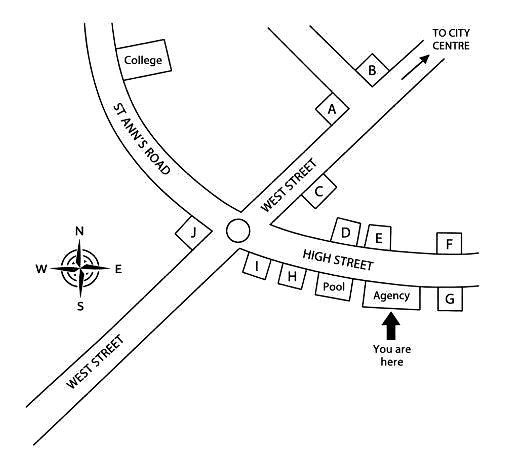
Map for questions 15-20 (bank, house, hostel, flat, post office, bus stop)
  1. 11

    a garden ____

    • A. the flat
    • B. the house
    • C. the hostel
  2. 12

    a garage ____

  3. 13

    an alarm system ____

  4. 14

    new furniture ____

  5. 15

    the bank

  6. 16

    the house

  7. 17

    the hostel

  8. 18

    the flat

  9. 19

    the post office

  10. 20

    the bus stop

Part 3 – Lesson Plans and Diagrams (Biogas Plant & Irrigation Machine)

Complete the notes and label the diagrams below. Write the correct letter (A–G) next to each item.
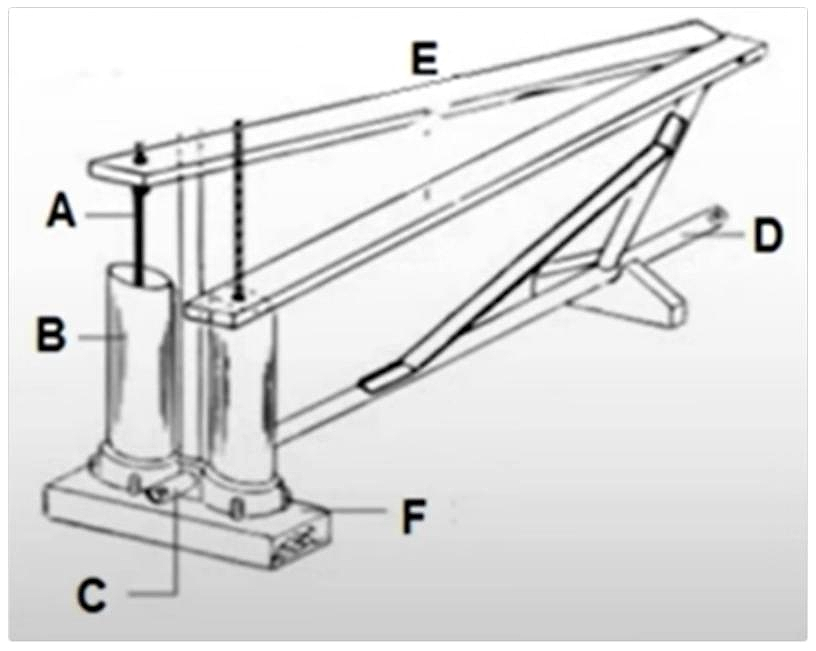
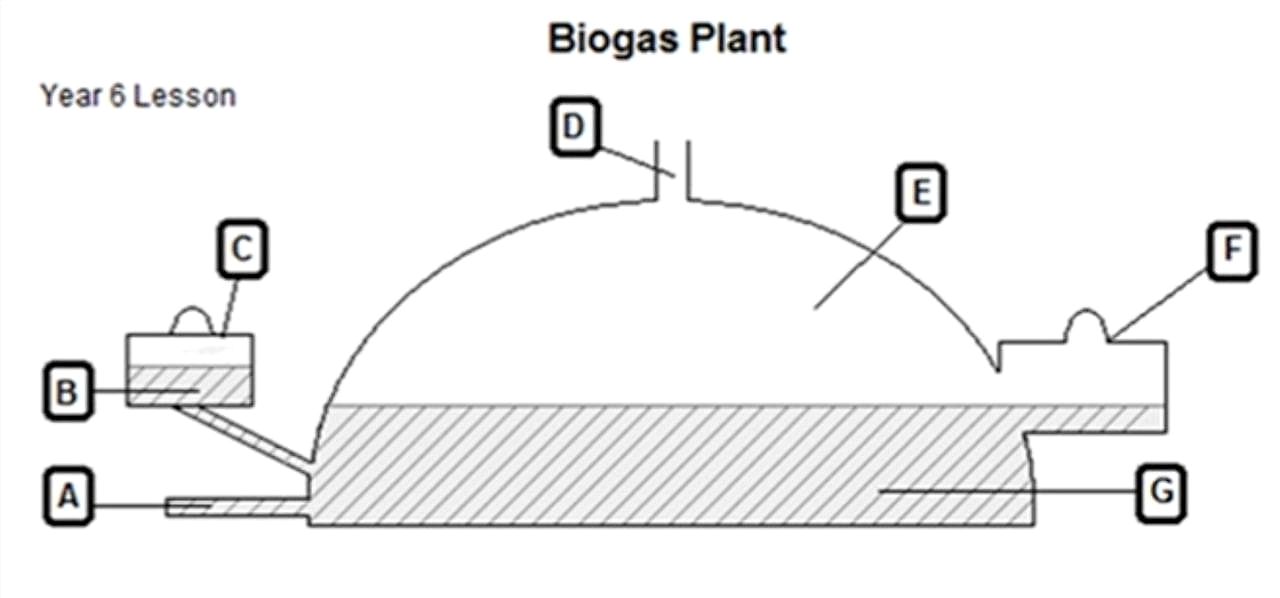
Irrigation machine diagram for questions 26-30 (inlet pipe, treadle, cylinder, piston, discharge pipe)Biogas plant cross-section diagram for questions 21-25 (inlet pipe, mixing chamber, gas outlet valves, gas storage dome, outlet chamber, slurry pit)
  1. 21

    waste container

  2. 22

    slurry

  3. 23

    water inlet

  4. 24

    gas

  5. 25

    overflow tank

  6. 26

    inlet pipe

  7. 27

    treadle

  8. 28

    cylinder

  9. 29

    piston

  10. 30

    discharge pipe

Part 4 – American Salt Marshes

Complete the sentences below. Write ONE WORD ONLY for each answer (31–34), choose the correct letter A, B or C (35–38), and write NO MORE THAN TWO WORDS for each answer (39–40).

31. The salt content in marshes can be as high as that of the ________.
32. At different times of the day, there are changes in salinity and in the ________ and warmth of the water.
33. Animals such as worms and shrimps feed on the ________ that grow in the marsh.
34. Marshland in the US has been used in the past for ________ cultivation.
35. The speaker says that one result of erecting artificial walls in salt marshes is that
  • A. the water level becomes too high.
  • B. the space for wildlife is reduced.
  • C. the water becomes less salty.
36. Some people have complained about the building of dikes because
  • A. walkers have less access to the marshes.
  • B. the dikes are ugly.
  • C. the dikes attract insects.
37. In the 20th century, a large proportion of marshes in America became
  • A. nature reserves.
  • B. housing developments.
  • C. insect sanctuaries.
38. There are now laws which help to prevent
  • A. erosion of land.
  • B. the building of walls.
  • C. the extinction of marine life.
The Horseshoe Crab
39. Most common food: ________
40. Time of year when female lays eggs: ________

Phiếu trả lời

Điền đáp án khi làm bài — kiểm tra kết quả ngay lập tức và lưu cục bộ, mọi câu sai sẽ vào nhật ký lỗi cùng bài học khắc phục.

  1. 1.
  2. 2.
  3. 3.
  4. 4.
  5. 5.
  6. 6.
  7. 7.
  8. 8.
  9. 9.
  10. 10.
  11. 11.
  12. 12.
  13. 13.
  14. 14.
  15. 15.
  16. 16.
  17. 17.
  18. 18.
  19. 19.
  20. 20.
  21. 21.
  22. 22.
  23. 23.
  24. 24.
  25. 25.
  26. 26.
  27. 27.
  28. 28.
  29. 29.
  30. 30.
  31. 31.
  32. 32.
  33. 33.
  34. 34.
  35. 35.
  36. 36.
  37. 37.
  38. 38.
  39. 39.
  40. 40.
Lưu trên thiết bị này — không cần tài khoản. Đăng nhập ở trang tiến trình nếu muốn đồng bộ sang nơi khác.
Hiện transcript
PART 1 Part one. You will hear two former school friends discussing a job as a cabin crew attendant. First, you have some time to look at questions one to five. Now listen carefully and answer questions one to five. Hello? Oh, hello. Um, this is Ellie Fisher. We were at school together. Oh, hi, Ellie. How are you? What are you doing these days? Well, actually, I'm looking for a job, and I was wondering about applying to an airline, you know, looking after the passengers, and I heard you're doing something like that. Yeah, I'm working as a cabin crew attendant. Right. So what does that involve? Well, you might have to give them the initial safety demonstration before takeoff, for example. You've probably seen that when you've made a journey by air. Actually, I've never flown, but I'd love to. That's why I'd like a job with an airline. Oh, right, and during the flight, you'd also be going round to see if anyone wants to buy anything. So I'd be dealing with money? That's right. You'd be responsible for that, and then, of course, you'd be serving meals and snacks and things. Okay. So can anyone apply? Well there are certain requirements. You must be at least nineteen years old, and there's also a minimum height. That's one hundred and sixty-eight centimeters. That's to make sure you can reach the higher cupboards in the plane. Right. I'm one hundred and sixty-nine centimeters, I think. What about qualifications? You need to show that you have a good level of English, that's written and spoken, and also maths. Okay. Well, I passed my exams in both those subjects, fortunately. Mm-hmm, and it's an advantage if you can speak another language, although for cabin crew it's not essential. I can speak Spanish. I did that at school until I was sixteen. Excellent. That'll be very useful. And I'm pretty fit. I don't have any medical problems. Okay. Oh, and can you swim? Yes. Good, because that's another requirement. Before you hear the rest of the conversation, you have some time to look at questions six to ten on page two. Now listen and answer questions six to ten. Now, if you're accepted, you'll get a six-week training course. Right. So that'll cover all aspects of the job, all the basic things you need to know, and then some special things like what action to take if a passenger suddenly has some sort of illness while you're in the air, for example. Right. I suppose you can't always count on a doctor being on board. No. And then you'll have to do a lot of work during the training on becoming aware of the variety of cultures that your passengers may come from and the implications of that. That's really interesting, actually. Okay. Well, I'd definitely like to apply. Um, what airline do you actually work for? It's a small airline called Eurontas. That's E-U-R-O-N-T-A-S. Is that Nor M in the middle? N for November. Okay. They're good people to work for. Have a look at their website. You can download the application form from there. Right. I don't have much in the way of experience, though. Well, what have you done since leaving school? I worked in a supermarket for a bit on the information desk. I was helping deal with queries from customers. Okay. Put that down. That's one of the most important aspects of the job, in fact. Oh, right, and last year I also did some voluntary work as part of a team. Should I put that down too? Of course. That's something else they'll be looking for, being able to work with others. Right. And a lot of airlines expect you to pay for your own uniform, but the good thing about this airline is that they provide it for you. Great. Well, thanks so much, Greg. I really appreciate... That is the end of section one. You now have half a minute to check your answers. PART 2 Section two. You will hear an accommodation agent telling a student about different accommodation options. First, you have some time to look at questions eleven to fourteen on page three. Now listen carefully and answer questions eleven to fourteen. Hello, can I help? Yes, I'm looking for accommodation. I'm a student in my second year at the college, and I wanted to rent something from September for myself and a friend. Well we've got several choices at the moment. Near the college, we've got a flat, a house, or there's a student hostel all at about the same rent. But of course, they all have different features and different things included in the rent. The properties don't all have gardens, I'm afraid. The house is quite small, not much space around it. It has got a bit of space at the back, but I wouldn't call it a garden. Mm-hmm. The hostel is part of a city development, so there's no space for a garden. But the flat has a communal garden that is shared by all the tenants. I would say that that's very good value for the price. Have you got a car? Yes. Um, there are garages round the corner from the house. Ah, but you have to rent those separately, and they might not be available. Oh. But each flat is allotted a garage in the grounds as part of the deal. The hostel doesn't have the space, I'm afraid. Mm-hmm. I guess you might also want to know about security as well. Mm. Uh, the house is the only one which is alarmed. The flats and the hostel are accessed through a main door, which has an intercom for visitors, so they're quite safe. Now, they're all furnished. Mm-hmm. The stuff in the flat's quite modern-looking, which most people like, and it's in quite good condition, considering the use it's had. Mm. All the furniture and fittings in the house have just been replaced after the last tenants left, so they'll be in excellent condition. And the furniture in the hostel is okay. It's about what you'd expect, really. Before you hear the rest of the conversation, you have some time to look at questions fifteen to twenty on page four. Now listen and answer questions fifteen to twenty. Well, I think I'd better go and look at them all. Uh, where are they? Here, let me show you on the map. Uh, right. Um, we're here in the accommodation agency on the High Street, facing north. Mm-hmm. Directly opposite us is the bank. Okay? Mm-hmm. If you stay on this side of the road and walk towards West Street, the house is not that far. It's next but one to the swimming pool, just before West Street. It's very convenient because it's near the shops. The hostel is on the corner of West Street and St. Anne's Road, near the roundabout. It's not a very wonderful building, but it's nice and close to the college. The flat is a bit of a walk, but it's in very nice surroundings. To get to the flat you go down West Street towards the center of the city, and the building is on the corner just before the first turning on the left. Mm-hmm. Although we're a bit outside the city center, the facilities aren't bad. There's a post office just round the corner from here. You go down the High Street and turn right into West Street, and it's on your right. Mm-hmm. Or if you want to go to the city center you could get the bus from here, just a few meters down the road from the agency, going east. You don't even need to cross the road. That is the end of section two. You now have half a minute to check your answers. PART 3 Part three. You will hear two students discussing their lesson plans and a diagram about a biogas plant. First, you have some time to look at questions twenty-one to twenty-five. Now listen carefully and answer questions twenty-one to twenty-five. Hello, Eve. Come in and sit down. How's it going? Fine, thanks. I'm looking forward to my teaching practice next week. Good. Now, you've got two classes, haven't you? Year three and year six. Have you done your lesson plans? Well, I've decided to take the topic of renewable energy. I haven't done a lesson plan for year six yet, but I thought I'd base their lesson on an example of very simple technology. So I've brought this diagram to show you. I got it from the Internet. Let's see. A biogas plant. So this is equipment for producing fuel from organic waste? Yes. The smaller container on the left is where you put the waste you've collected. Right. And from there, it's piped into the larger tank. That's right. And that slurry on the base of the larger tank. Right. And what exactly is slurry? It's a mixture of organic waste and water. So is that pipe at the bottom where the water comes in? Yes, it is. As the slurry mixture digests it produces gas, and that rises to the top of the dome. Then when it's needed, it can be piped off for use as fuel in homes or factories. It's very simple. I suppose there's some kind of safety valve to prevent pressure buildup. That's the overflow tank, that container on the right. As the slurry expands, some of it flows into that, and then once some of the gas has been piped off, the slurry level goes down again, and the overflow tank empties again. I see. Well, I think that's suitably simple for the age level it's for. I look forward to seeing the whole lesson plan. Thanks. And can I show you my ideas for the year three lesson? Of course. Let's look. Before you hear the rest of the discussion, you have some time to look at questions twenty-six to thirty. Now listen and answer questions twenty-six to thirty. Let's take a detailed look at how this traditional irrigation machine works, focusing on its five main components. First, the inlet pipe. This is the part through which water enters the machine. You'll find it positioned low to the ground, right at the back end of the system. It's connected to a nearby water source, such as a river or pond, and its main role is to draw water into the pumping mechanism. Without it, the machine wouldn't be able to function. Next, we have the treadle. This is the long pedal that runs along the top of the machine and extends toward the back. Farmers use it by stepping on it repeatedly, which drives the system. The pressure from their foot moves other parts of the machine, allowing water to be lifted and pushed forward. Now let's look at the cylinder. This is one of the two vertical chambers in the center of the machine. It's shaped like a tall tube. As the treadle is pushed, the cylinder fills with water and helps pressurize it. Inside the cylinder, we find the piston. This part moves up and down rapidly to create the suction needed to pull water into the cylinder and then push it out. It's a rod-like device connected to the treadle by a series of levers. Finally, the discharge pipe. This pipe is located on the side near the base of the machine. Once the water is pressurized it exits through the discharge pipe and flows into channels that carry it to the fields. That is the end of part three. You now have thirty seconds to check your answers to part three. PART 4 Part 4. You will hear part of a lecture about American salt marshes, which are areas of low land found near the sea. 1st, you have some time to look at questions 31 to 40. Now listen carefully and answer questions 31 to 40. Right. This morning, I want to give you a brief introduction to a different kind of habitat, American salt marshes, and then we'll examine a particular inhabitant of the marsh, the horseshoe crab. Okay, so what are the defining features of a salt marsh to begin with? Well, salt marshes are found on the coast in various parts of the USA. They are really areas between land and water. Obviously, these are very wet areas, and the salinity, that's the amount of salt in the water, ranges from ocean strength to almost fresh. In other words, very low indeed. And the salt marshes are affected by daily changes in sea levels. The sea might wash in over them as frequently as twice a day, so the habitat is constantly changing. The amount of salt in the water rises and falls, as does the depth and warmth of the water. We'll be having a detailed look at the horseshoe crab in a moment, but marshes provide plentiful food for other creatures that feed there too, such as worms and shrimps. This food comes in the form of plants that thrive there. Interestingly enough, 200 years ago, the flow of water in marshland in the United States was controlled so that rice could be grown there. Little is grown there today, but 15% of coastal marshes are enclosed artificially in order to attract wild birds to the area, and we'll be examining those too. But before looking at the wildlife, there are a few political issues to make you aware of. There are always controversial issues when humans decide to make changes to natural habitats. During the past 20 years, many objections have been voiced to the building of artificial earth walls, or dikes, to use the correct term, on salt marshes to control the natural flow of seawater. Since the walls restrict the movement of high volumes of water, this means that the natural habitat of local aquatic life is reduced. And because the water is shallower, the temperature of the water may rise significantly during periods of low rainfall. In addition, although the insects are very happy there, many people are unhappy with the dikes. This isn't because they distract from the natural beauty of the landscape, but because their presence means it's more difficult for walkers who appreciate the marshes to go where they want. There is controversy over the different values placed on the resources of the marshes. Some people would like to see them used more fully for hunting, while others would like to see business permits granted to allow for further development. Interestingly, in the mid-20th century, marshes were not thought of as valuable at all, and over half of the salt marshes in the USA were destroyed at that time. In the main, this was due to filling the marshes to create more land for housing developments and to control the mosquito population. However, state laws now do reflect the importance and growing appreciation of marshes, not only as natural habitats, but also because they provide a natural barrier against storm damage and therefore limit the amount of land lost to the sea. Right. We'll be debating some of those issues in the seminars, but let's now turn our attention to the horseshoe crab, which is the focus of our study this morning. Horseshoe crabs have changed very little in the last 350 1000000 years. I find them interesting in many ways because they are, in fact, distant relatives of the spider and not crabs at all. They look quite dangerous. In fact, they are absolutely harmless. The horseshoe crab's main diet is one of shellfish, but they will eat worms too. The crab places its food near its mouth in the center of its underside where its legs are attached and grinds and crushes it there. It has 5 pairs of legs. The female lays between 200 and 300 eggs and comes ashore to do that. This process takes place in spring, before the sand heats up in the summer months. Right. What I'm gonna do now is show you some photos. That is the end of part 4. You now have 45 seconds to check your answers to part 4.
Hiện đáp án

Đáp án

  1. 1. money

    The answer is 'money' because the speaker says, 'you'd be dealing with money... You'd be responsible for that' when talking about selling things during the flight.

  2. 2. 168

    The answer is '168' because the requirement is 'a minimum height. That's one hundred and sixty-eight centimeters.'

  3. 3. maths / math

    The answer is 'maths' because the speaker says, 'You need to show that you have a good level of English... and also maths.'

  4. 4. language

    The answer is 'language' because the speaker says, 'it's an advantage if you can speak another language, although for cabin crew it's not essential.'

  5. 5. swim

    The answer is 'swim' because the speaker asks, 'can you swim?... that's another requirement.'

  6. 6. illness

    The answer is 'illness' because the training covers 'what action to take if a passenger suddenly has some sort of illness while you're in the air.'

  7. 7. cultures

    The answer is 'cultures' because the training includes 'becoming aware of the variety of cultures that your passengers may come from.'

  8. 8. Eurontas

    The answer is 'Eurontas' because the speaker says, 'It's a small airline called Eurontas. That's E-U-R-O-N-T-A-S.'

  9. 9. team

    The answer is 'team' because the voluntary work was 'as part of a team,' and the friend says, 'that's something else they'll be looking for, being able to work with others.'

  10. 10. uniform

    The answer is 'uniform' because the speaker says, 'the good thing about this airline is that they provide it for you,' meaning you don't have to buy it.

  11. 11. A

    The answer is A (the flat) because 'the flat has a communal garden that is shared by all the tenants.' The house only has 'a bit of space at the back,' and the hostel has 'no space for a garden.'

  12. 12. A

    The answer is A (the flat) because 'each flat is allotted a garage in the grounds as part of the deal.' The house's garages are separate and 'might not be available,' and the hostel has no space for garages.

  13. 13. B

    The answer is B (the house) because 'the house is the only one which is alarmed.' The flat and hostel have intercoms but no alarm system.

  14. 14. B

    The answer is B (the house) because 'all the furniture and fittings in the house have just been replaced,' so they are new. The flat's furniture is 'modern-looking' but not new, and the hostel's is just 'okay.'

  15. 15. E

    The answer is E because 'Directly opposite us is the bank,' so the bank is across from the agency, which is at E on the map.

  16. 16. I

    The answer is I because 'the house is... next but one to the swimming pool, just before West Street,' which matches location I.

  17. 17. J

    The answer is J because 'the hostel is on the corner of West Street and St. Anne's Road, near the roundabout,' which is J on the map.

  18. 18. A

    The answer is A because 'the flat... is on the corner just before the first turning on the left' as you go down West Street, which is A.

  19. 19. C

    The answer is C because 'the post office... you go down the High Street and turn right into West Street, and it's on your right,' which matches C.

  20. 20. G

    The answer is G because 'the bus from here, just a few meters down the road from the agency, going east,' which is G on the map.

  21. 21. C

    The answer is C because 'The smaller container on the left is where you put the waste you've collected,' so C is the waste container.

  22. 22. G

    The answer is G because 'that slurry on the base of the larger tank,' so G is where the slurry is.

  23. 23. A

    The answer is A because 'that pipe at the bottom where the water comes in,' so A is the water inlet.

  24. 24. E

    The answer is E because 'it produces gas, and that rises to the top of the dome,' so E is where the gas is.

  25. 25. F

    The answer is F because 'the overflow tank, that container on the right,' so F is the overflow tank.

  26. 26. D

    The answer is D because 'the inlet pipe... positioned low to the ground, right at the back end of the system,' which matches D.

  27. 27. E

    The answer is E because 'the treadle... runs along the top of the machine and extends toward the back,' which is E.

  28. 28. B

    The answer is B because 'the cylinder... one of the two vertical chambers in the center of the machine,' which is B.

  29. 29. A

    The answer is A because 'the piston... is a rod-like device connected to the treadle,' which is A.

  30. 30. C

    The answer is C because 'the discharge pipe... is located on the side near the base of the machine,' which is C.

  31. 31. ocean

    The answer is 'ocean' because the passage says, 'the salinity... ranges from ocean strength to almost fresh.'

  32. 32. depth

    The answer is 'depth' because the passage says, 'the amount of salt in the water rises and falls, as does the depth and warmth of the water.'

  33. 33. plants

    The answer is 'plants' because 'food comes in the form of plants that thrive there,' which worms and shrimps feed on.

  34. 34. rice

    The answer is 'rice' because 'the flow of water in marshland... was controlled so that rice could be grown there.'

  35. 35. B

    The answer is B because 'the natural habitat of local aquatic life is reduced' by building artificial walls. Option A is wrong because it doesn't mention water level becoming too high, and C is wrong because it doesn't say the water becomes less salty.

  36. 36. A

    The answer is A because 'their presence means it's more difficult for walkers... to go where they want.' B is wrong because it says it's not about the landscape, and C is wrong because insects are happy but that's not the complaint.

  37. 37. B

    The answer is B because 'over half of the salt marshes... were destroyed... to create more land for housing developments.'

  38. 38. A

    The answer is A because 'they provide a natural barrier against storm damage and therefore limit the amount of land lost to the sea.' B is wrong because it doesn't mention stopping building walls, and C is wrong because it doesn't mention marine life extinction.

  39. 39. shellfish

    The answer is 'shellfish' because 'the horseshoe crab's main diet is one of shellfish.'

  40. 40. spring

    The answer is 'spring' because 'the female lays between 200 and 300 eggs and comes ashore to do that... in spring, before the sand heats up.'