Listening 2026-06 Test 5

Tháng thi: 2026-06

Tái tạo từ ký ức thí sinh — không phải tài liệu chính thức của IELTS. Audio và bài đọc chỉ là bản luyện tập.

Audio tái hiện

Section 1

Questions 1–5

Complete the form below. Write NO MORE THAN THREE WORDS AND / OR A NUMBER for each answer.

Protecting Environment Through Recycling
Aim: protecting environment through recycling
Type of group: non-profit
Name: 1...............................
Address: 2...............................
E-mail: 3...............................
Postcode: 4...............................
  1. 1

    Name: 1...............................

  2. 2

    Address: 2...............................

  3. 3

    E-mail: 3...............................

  4. 4

    Postcode: 4...............................

  5. 5

    Postcode: 4...............................

Questions 6–10

Complete the form below. Write NO MORE THAN TWO WORDS for each answer.

Recycling
Ways of recycling
Newspaper: in a 6...............................
Nearest rubbish collection centre: On the East Side of 7...............................
Rubbish that can be recycled
Blue box: 8...............................
Green box: glass and plastics
Yellow box: paper
Rubbish that cannot be recycled: 9...............................
Name of a booklet: 10...............................
  1. 6

    Newspaper: in a 6...............................

  2. 7

    Nearest rubbish collection centre: On the East Side of 7...............................

  3. 8

    Blue box: 8...............................

  4. 9

    Rubbish that cannot be recycled: 9...............................

  5. 10

    Name of a booklet: 10...............................

Section 2

Questions 11–15

Choose the correct letter, A, B or C.

  1. 11

    What's the new improvement about the zoo this time?

    • A. The zoo has built a new dog-walking area.
    • B. The zoo has brought a new batch of animals.
    • C. The zoo has expanded its exhibition area.
  2. 12

    What is the change for the new regulation enacted in June?

    • A. The zoo is not open during the weekdays.
    • B. Visitors are allowed to feed the animals at night.
    • C. Visitors are allowed to see the animals until the late night.
  3. 13

    While visiting the kangaroo, which behaviour is forbidden?

    • A. Photo-taking
    • B. Shouting
    • C. Feeding
  4. 14

    Why is the pye-dog zone temporarily closed?

    • A. Because the fence is broken.
    • B. Because the pye-dogs are in hibernation.
    • C. Because the pye-dog zone is under construction.
  5. 15

    Where can the visitors buy the discounted ticket?

    • A. Gift shop
    • B. Photo shop
    • C. Reception desk

Questions 16–20

Label the map below. Write the correct letter, A-H, next to questions 16-20.
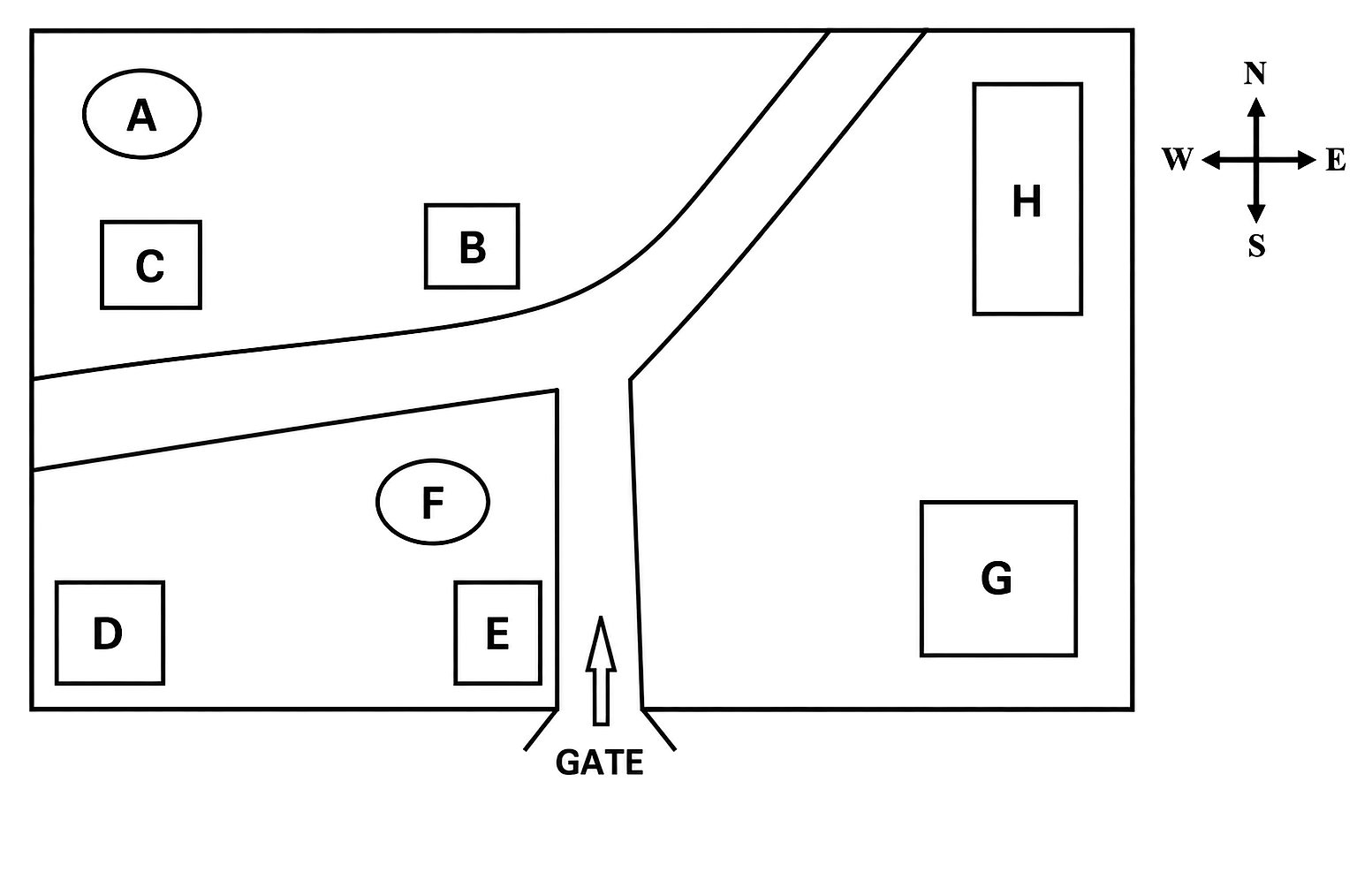
Recreated diagram for questions 16, 17, 18, 19, 20
  1. 16

    Bird hide

  2. 17

    Pye-dog zone

  3. 18

    Rest area

  4. 19

    Kangaroo visiting site

  5. 20

    Photo shop

Section 3

Questions 21–24

Choose the correct letter, A, B or C.

  1. 21

    Jacob says that

    • A. he needs to do more research.
    • B. he read widely before writing the draft.
    • C. he isn't confident about his main points.
  2. 22

    The tutor thinks Jacob

    • A. has presented both sides of the argument well.
    • B. needs to do more work on the content.
    • C. has organised the essay very well.
  3. 23

    The ideas Jacob expresses in the essay

    • A. should be re-ordered.
    • B. are poorly presented.
    • C. don't make sense.
  4. 24

    The tutor suggests that Jacob

    • A. look at the use of paragraphs in other pieces of writing.
    • B. read one or two textbooks on writing skills.
    • C. read widely to develop his vocabulary.

Questions 25–27

Complete the tutor's notes below. Write NO MORE THAN THREE WORDS for each answer.

Very natural use of 25........... Well done!
Try using higher level 26........... in your essays.
The sentences are sometimes too 27...........
  1. 25

    Very natural use of 25........... Well done!

  2. 26

    Try using higher level 26........... in your essays.

  3. 27

    The sentences are sometimes too 27...........

Questions 28–30

Choose THREE letters, A-F. What does the tutor suggest?

  1. 28

    What does the tutor suggest?

    • A. Try some worksheets to practise formal writing.
    • B. Check spelling carefully.
    • C. Use more advanced vocabulary.
    • D. Buy a thesaurus.
    • E. Use some of the synonyms the tutor has suggested.
    • F. Find alternative words to those that are underlined.
  2. 29

    What does the tutor suggest?

  3. 30

    What does the tutor suggest?

Section 4: Questions 31–40

Tracking the Migration of Pygmy Blue Whales

Complete the lecture notes below. Write NO MORE THAN TWO WORDS for each answer.

Pygmy Blue Whale Research
Pygmy blue whales:
Before 1966 it is likely they were 31.............. with the Antarctic blue whales.
Aim of study
To find out more about their 32.............. and movements.
Method
Whales are tagged with an antenna.
When the antenna communicates with a number of satellites, the whale's 33.............. can be identified.
Researchers access the results using the project 34..............
Findings
The whales travel from the 35.............. of Australia to breeding grounds in Indonesia during March and April, and return to Australian waters in 36..............
Pygmy whales do not go without 37.............. whilst they are in their breeding grounds.
Conservation issues
The effect of 38.............. routes on communication between whales.
Conservation efforts can take place over a(n) 39.............. area now there is evidence that they migrate out of Australian waters.
Future studies:
To explore whether pygmy whales off the southern coast of Australia follow the same northerly migratory routes as those studied or whether they travel to a(n) 40.............. region to the south of Australia.
  1. 31

    Before 1966 it is likely they were 31.............. with the Antarctic blue whales.

  2. 32

    To find out more about their 32.............. and movements.

  3. 33

    When the antenna communicates with a number of satellites, the whale's 33.............. can be identified.

  4. 34

    Researchers access the results using the project 34..............

  5. 35

    The whales travel from the 35.............. of Australia to breeding grounds in Indonesia during March and April, and return to Australian waters in 36..............

  6. 36

    The whales travel from the west coast of Australia to breeding grounds in Indonesia during March and April, and return to Australian waters in 36..............

  7. 37

    Pygmy whales do not go without 37.............. whilst they are in their breeding grounds.

  8. 38

    The effect of 38.............. routes on communication between whales.

  9. 39

    Conservation efforts can take place over a(n) 39.............. area now there is evidence that they migrate out of Australian waters.

  10. 40

    To explore whether pygmy whales off the southern coast of Australia follow the same northerly migratory routes as those studied or whether they travel to a(n) 40.............. region to the south of Australia.

Phiếu trả lời

Điền đáp án khi làm bài — kiểm tra kết quả ngay lập tức và lưu cục bộ, mọi câu sai sẽ vào nhật ký lỗi cùng bài học khắc phục.

  1. 1.
  2. 2.
  3. 3.
  4. 4.
  5. 5.
  6. 6.
  7. 7.
  8. 8.
  9. 9.
  10. 10.
  11. 11.
  12. 12.
  13. 13.
  14. 14.
  15. 15.
  16. 16.
  17. 17.
  18. 18.
  19. 19.
  20. 20.
  21. 21.
  22. 22.
  23. 23.
  24. 24.
  25. 25.
  26. 26.
  27. 27.
  28. 28.
  29. 29.
  30. 30.
  31. 31.
  32. 32.
  33. 33.
  34. 34.
  35. 35.
  36. 36.
  37. 37.
  38. 38.
  39. 39.
  40. 40.
Lưu trên thiết bị này — không cần tài khoản. Đăng nhập ở trang tiến trình nếu muốn đồng bộ sang nơi khác.
Hiện transcript
==================== IELTS Listening Transcript ==================== PART 1 Speaker 0: Now turn to section one. Speaker 0: Section one. Speaker 0: You will hear a conversation between a staff member from Gayer's Guardians and a man who wants to do something to protect the environment. Speaker 0: First, you have some time to look at questions one to five. Speaker 0: You will see that there is an example which has been done for you. Speaker 0: On this occasion only, the conversation relating to this will be played first. Speaker 2: Hello. How may I help you? Well, I've been seeing these yellow boxes in front of a lot of houses in my neighborhood. Just wondered what they were for. I noticed your phone number on all of them, so I called. Could you tell me about your business? Speaker 1: We do do recycling, but we're not a business. Gaia's Guardians is a nonprofit group. We encourage recycling as a way of protecting the environment. Speaker 0: The woman says that they encourage recycling as a way of protecting the environment. So recycling has been written in the space. Speaker 0: Now we shall begin. You should answer the questions as you listen because you will not hear the recording a second time. Listen carefully and answer questions one to five. Speaker 2: Hello. How may I help you? Well, I've been seeing these yellow boxes in front of a lot of houses in my neighborhood. Just wondered what they were for. I noticed your phone number on all of them, so I called. Could you tell me about your business? Speaker 1: We do do recycling, but we're not a business. Gaia's Guardians is a nonprofit group. We encourage recycling as a way of protecting the environment. Speaker 2: I don't know. I mean, it is a good idea, but I really don't read the newspaper every day or anything. And we don't come collect newspapers every day. Speaker 1: In fact, we only do pickups every other week. Speaker 2: Oh, well, then maybe I could help. I mean, in my neighborhood, there's too much rubbish lying around everywhere. I'd like to help out, I guess. Speaker 1: That's great, sir. You're doing the right thing. Okay. I need to get your contact information. What's your name, please? Speaker 2: Peter Wizrow. Speaker 1: Peter, how do you spell your last name? W I s r o w? Speaker 2: No. Actually, it's w I s r o u g h. Speaker 1: Oh, I'm sorry. I'm a terrible speller. Speaker 2: You're a good speller. It's just that my family are terrible pronouncers. Speaker 1: You're quite a card, Peter. Okay. Now what's your address? Speaker 2: Number 168 Bridge Road. That's here in London. Speaker 1: How about if I have any questions? I'm sending you a copy of our booklet too. The booklet has our phone number and our email address, helpline@blackcat.com. That's helpline@blackcat.com. But I nearly forgot to ask. What's your postcode? Speaker 2: BS97PU. Speaker 1: PS97BU? Speaker 2: No. That's B as in Boy S 9 7 P as in Peter U. Speaker 0: Before you hear the rest of the conversation, you have some time to look at questions six to 10. Speaker 0: Now listen and answer questions six to 10. Speaker 2: So I'm guessing those yellow boxes I saw are for recycled newspapers. Speaker 1: Yes. That is correct, and it's free of charge. Speaker 2: Wow. That's good news. Do you recycle anything besides newspaper? Speaker 1: Oh, yes. We recycle most everything. Glass, plastic, paper. Speaker 2: Oh, so I can put, like, glass and plastic bottles in the box. Speaker 1: Sorry again. Things like that, you have to bring to our collection center. Speaker 2: And where is that? Speaker 1: Our main center isn't that far from you. It's actually right on the East Side of Central Park. Speaker 2: That new blue building? Speaker 1: That's the one. Speaker 2: Cool. Hey. What's with all those different colored boxes outside that place? Speaker 1: Oh, that's for the different materials we recycle. The blue is for metal, the green is for glass and plastics, and the yellow, of course, is for paper. Speaker 2: Okay. I'll try and manage to keep all that straight. Speaker 1: Oh, no need. They're each labeled. Speaker 2: Great. So which one would I put magazines in? Speaker 1: Actually, they don't go in any of the bins. Unfortunately, magazines can't be recycled because of the material they're made of. It's such a waste. So would you be interested in volunteering? Speaker 2: I'll think about it. Could you send me some more info? Speaker 1: Absolutely. Along with the newspaper box, I'll be sending you our booklet, Savvy. That is S A V V Y. It tells you about what you can do to protect the environment in your daily life. Plus, it lists things you can do as a volunteer with our group. Speaker 2: Hey. That's cool. Thanks. Speaker 1: My pleasure. Do you have any other questions or concerns? Speaker 2: Nope. That's it. Speaker 0: That is the end of section one. You now have half a minute to check your answers. PART 2 Speaker 0: Section two. You will hear part of a talk about an Australian wild zoo given by a tour guide. First, you have some time to look at questions 11 to 15. Now listen carefully and answer questions 11 to 15. Speaker 3: Good morning, everybody, and welcome to the Australian Wild Zoo. I would like to start by introducing you to the new features that we have added to our zoo in the recent renovation. Being the only zoo in the area, we receive thousands of visitors a year. We found that this huge footfall was too demanding for the facilities that we were able to provide, and so we decided to expand ourselves in order to give every visitor a brilliant and exciting experience. We initially intended to build a new dog walking area. However, we felt that the zoo should cater only to exotic animals. During our previous renovation, we expanded the exhibition center, and so we felt that this time, the zoo would benefit most from introducing a new batch of animals, so visitors can now see a whole range of new additions at the Australian Wild Zoo, including lions and bears. With this huge improvement to our facilities, we also found it necessary to change our regulations, which we put into action in June. We now allow visitors access to the zoo during weekdays. And as some of our newly added animals are nocturnal, guests may also now visit the animals late at night. Unfortunately, some visitors had started feeding the animals during these late night viewing times, which disrupted their feeding pattern, and as a result, we had to ban food in the viewing areas. One of our most exciting additions to the zoo is our native kangaroo, who we have named Frisbee. For a fee of just $5, visitors can have their photo taken with him and have it printed onto a selection of items such as key rings and mugs. At first, visitors were also allowed to feed Frisbee items that we provided, such as carrots and leaves. However, some guests started feeding him hamburgers and chips, so we were forced to forbid visitors from feeding him. As kangaroos are such calm animals, Frisbee isn't disturbed by the noises and shouting of visitors at the zoo, which has helped him to settle in at his new home very quickly. The pie dog zone has been permanently closed throughout the winter period to allow the dogs to hibernate as they would in their natural habitat. We were very excited to be reopening the zone. However, unfortunately, we have been forced to close it temporarily as the result of a broken fence, which will take about one week to fix. We were intending to renovate the zone with the other construction that we were undertaking, but unfortunately, we did not have sufficient funds. We understand that this temporary closure may disappoint our visitors, and so we have decided to offer a discounted price on our tickets for the next week. If you ask at the reception desk, they will happily direct you to the photo shop where you can purchase the ticket. The ticket will also entitle you to a 10% discount off any item in our gift shop where we sell a range of items including postcards and fluffy toys. Speaker 0: Before you hear the rest of the talk, you have some time to look at questions 16 to 20. Now listen and answer questions 16 to 20. Speaker 3: Now we're currently standing at the gate which is marked with the arrow on the map. Now if any of you need to visit the toilets before we get started, they're right here to our left. Out to the east, just across the grass, there is the bird hide where we have over 100 species of birds for you to watch. We even have an interactive zone where you can feed them with seed and take photographs with our parrots. What a great souvenir to remember your trip. And up the path to the north, if you look in front of you now, there is the pie dog zone. Although it is closed, if any of the dogs are playing outside, you will be able to see them through the fence. And then let's pass by the refuge. This area is a sheltered part for brolga watchers who can use it to spy through binoculars. And after that, I suggest that you all visit the rest area for some cold drinks and snacks as it is very hot outside. It is just at the northwest corner of the zoo. After that, you could cut across the path to the large rectangular hut where you will be able to see our new addition of fierce lions. The mother has just had cubs, so it is really quite a rare thing to see. And around to the west, for those of you who want to visit Frisbee, our native kangaroo, he is in the circular shaped hut just up the path to the left. Don't forget to have your photo taken with him. Now as I mentioned before, you can purchase your discounted tickets at the Photoshop, and this is also where you will come to collect any photos you have had taken at the zoo during your visit. The Photoshop is located at the Southwest corner of the zoo. Okay, ladies and gentlemen. Enjoy your visit. Speaker 0: That is the end of section two. You now have half a minute to check your answers. PART 3 Speaker 4: Section three. You will hear a tutor talking to a student during a tutorial. The tutor is giving the student feedback on an essay. First, you have some time to look at questions 21 to 24. Listen and answer questions 21 to 24. Speaker 5: Hello, Jacob. Come in and take a seat. How are you finding the course? Speaker 6: Very good. I'm really enjoying myself. Speaker 5: Good. Well, I've had a look at the first draft of your assignment, and it shows a great deal of promise. How well do you think you answered the question? Speaker 6: I think I dealt with the task okay. I spent hours in the library reading up on the subject, so I feel confident I answered the question. I'm not sure about my Spanish, though. Speaker 5: Well, for a first draft, I was very happy with the content. You've included all the important points, and you've given a very balanced argument, so I'm pleased with that. I think one area you need to work on is organization. Speaker 6: Yes. My other tutor said the same thing about another piece of writing. My ideas weren't organized logically, she said. Speaker 5: Well, to be fair, I think the order of your ideas here is fine. It's your paragraphing that's the problem. If you look at this page, it's difficult to actually see your organization. Your ideas are in the right order, but I can't make the organization out very well because there aren't any paragraphs. Speaker 6: Yes. I see what you mean. Perhaps if I left a line between paragraphs, it would make it clearer. Speaker 5: Yes. That's an excellent idea. Have a look at paragraphs in books, magazines, newspapers, that kind of thing. There's no need to read everything. Just pay attention to how paragraphs are presented. Speaker 4: Now listen and answer questions 25 to 30. Speaker 6: Okay. I'll have a look at some of my friends' work as well. They don't seem to have this problem. What about the style of the writing? Is that okay? I've never really learned how to write formally, so I'm always a bit worried about this when I write an essay. Speaker 5: The register is very good, Jacob. No problem at all. You've used lots of nice set expressions we'd expect to find in a piece of writing like this and used them very naturally. Speaker 6: That's good. What about my Spanish? Speaker 5: Your basic grammar is okay. You haven't made many mistakes, so that's good. What I would suggest is trying to experiment more with advanced sentence structures. Yours tend to be on the short side. That's okay when short sentences are required, but sometimes combining two sentences into one can make the essay flow more naturally. Speaker 6: Have you got anything I can use to practice that? Any books or websites I could visit? Speaker 5: Yes. No problem. I'll give you one of our worksheets in a minute. You can take it away and work on it before you write your second draft. Finally, another thing you could think about is using more advanced vocabulary. Again, the words you've used are fine, but there are more advanced synonyms that would fit more appropriately in an essay like this. Speaker 6: Well, I've bought a thesaurus. Speaker 5: Yes. That's just what you need. As you can see, I've underlined where I think you could make changes, but I haven't suggested any synonyms. Use your thesaurus to try and find some alternatives. PART 4 Speaker 7: Section four. You are going to hear a lecturer giving a talk about whale migration. First, you have some time to look at questions 31 to 40. Now listen and answer questions 31 to 40. Speaker 8: Today, we're going to continue our investigation into the use of technology in plotting oceanographic migratory patterns, and I'd like to focus specifically on creatures that we didn't even realise existed until very recently. Pygmy blue whales. In particular, I'd like to talk about a high-tech method of tracking that researchers have used to find out more about these creatures. Pygmy blue whales, which are one of several subspecies of blue whales, spend their lives in the vast expanses of the Indian and Southern Pacific Oceans. They were first identified as a distinct subspecies in 1966. Before then, they were probably confused with the Antarctic or true blue whale, so it's only recently that researchers have started to learn about them and their migrations to and from their breeding and feeding grounds. Scientists are interested in pygmy blue whales because, although they are a very mobile subspecies, very little is known about their movements and their populations. Large scale movements of whales are particularly hard to study, and what we do know about pygmy blue whales, we've mainly learned from examining whaling records. There are several populations of pygmy blue whales in the Southern Hemisphere, and two main feeding grounds off Southern and Western Australia. Scientists were interested in testing their hypothesis that the pygmy blue whales feeding off Western Australia migrate to Indonesia to breed. To track the whales' movements, researchers made use of something called satellite telemetry. This refers to the use of a satellite linked tag attached to a whale. When the antenna on the whale breaks the surface of the water, the tag communicates with a satellite system. The location of the whale can be determined when multiple satellites receive the tag's transmissions, much like how the navigation system works on a mobile phone. Researchers receive this location data in almost real time via the project website, which allows them to track the movement of the tagged whale from many miles away. The use of these tags has enabled researchers to discover that pygmy blue whales do indeed travel northwards from the West Coast of Australia in March and April, reaching the warmer breeding grounds of Indonesia in June. They remain there until September, at which time they then returned to Australian waters. In addition to identifying the migratory pattern of this particular population of pygmy whales, research has also shone new light on the whales' feeding patterns. It's usually assumed that whales go without food outside of the summer, when they leave their feeding grounds. But interestingly, the pygmy blue whales studied travel from productive feeding grounds off Western Australia to productive areas in Indonesia, and therefore probably still have the opportunity to feed whilst they are in their breeding grounds. It is hoped that mapping the migratory movements of the pygmy whales will help conservation efforts for these endangered animals. And the study has enabled researchers to identify specific conservation issues. For example, the migratory routes of pygmy blue whales correspond closely with shipping routes. Consequently, researchers are keen to monitor whether this has any negative effects on the whales' behaviour. Baleen whales – these are whales that use filters to feed, not teeth – use sounds to communicate and to gain information about their environment. Clearly, as pygmy blue whale movements correspond to shipping routes, there is potential for the noise generated by ships to affect communication, and hence social encounters and feeding. Previously, researchers could only hypothesize that pygmy blue whales occupying Western Australian waters travelled into Indonesian waters. Now that this hypothesis has been borne out by evidence, conservation efforts can be undertaken in a wider area than just Australian waters. However, scientists aren't stopping here. A question mark still remains over the movements of the pygmy blue whales that utilise the feeding grounds further south, off the Southern Coast of Australia. Genetic evidence indicates that there is a mixing taking place between the population of whales in the feeding grounds of Western Australia and the population further south. Researchers are keen to discover whether the pygmy whales from the southern feeding grounds follow a similar migration route to those from the West Coast, or whether they migrate to the subtropical region to the South of Australia. As a result, there are plans to tag the pygmy blue whales further south in order to find out whether they move through the same areas as the western population and are therefore exposed to the same risks. Speaker 7: That is the end of section four. You now have half a minute to check your answers.
Hiện đáp án

Đáp án

  1. 1. every other week

    The man is told, 'we only do pickups every other week,' so the answer is 'every other week.'

  2. 2. Peter Wisrough

    The man gives his name as 'Peter Wizrow,' and then spells his last name as 'W I S R O U G H,' confirming the answer is 'Peter Wisrough.'

  3. 3. 168 Bridge Road

    Peter says his address is 'Number 168 Bridge Road,' so the answer is '168 Bridge Road.'

  4. 4. helpline@blackcat.com

    The woman says their email address is 'helpline@blackcat.com,' so the answer is 'helpline@blackcat.com.'

  5. 5. BS97PU

    Peter spells out his postcode as 'BS97PU,' so the answer is 'BS97PU.'

  6. 6. yellow

    The woman confirms the yellow boxes are for recycled newspapers, so the answer is 'yellow.'

  7. 7. Central Park

    The collection center is 'right on the East Side of Central Park,' so the answer is 'Central Park.'

  8. 8. metal

    The woman says, 'The blue is for metal,' so the answer is 'metal.'

  9. 9. magazines

    She says, 'magazines can't be recycled because of the material they're made of,' so the answer is 'magazines.'

  10. 10. Savvy

    The booklet is called 'Savvy,' spelled out as 'S A V V Y,' so the answer is 'Savvy.'

  11. 11. B

    The speaker says, 'the zoo would benefit most from introducing a new batch of animals,' so B is correct. A is wrong because they decided not to build a dog-walking area; C is wrong because the exhibition area was expanded in a previous renovation, not this one.

  12. 12. C

    The speaker says, 'guests may also now visit the animals late at night,' so C is correct. A is wrong because the zoo is open during weekdays; B is wrong because feeding animals at night is not allowed.

  13. 13. C

    Feeding the kangaroo is forbidden because 'some guests started feeding him hamburgers and chips, so we were forced to forbid visitors from feeding him.' A and B are wrong because photo-taking and shouting are allowed.

  14. 14. A

    The pye-dog zone is 'closed temporarily as the result of a broken fence,' so A is correct. B is wrong because hibernation is only for winter, and C is wrong because it is not under construction.

  15. 15. B

    Discounted tickets can be bought at the 'photo shop,' so B is correct. A and C are wrong because the gift shop and reception desk do not sell the discounted tickets.

  16. 16. G

    The bird hide is 'out to the east, just across the grass,' matching position G on the map.

  17. 17. B

    The pye-dog zone is 'up the path to the north,' matching position B on the map.

  18. 18. A

    The rest area is 'at the northwest corner of the zoo,' matching position A on the map.

  19. 19. F

    The kangaroo is 'in the circular shaped hut just up the path to the left,' matching position F on the map.

  20. 20. D

    The photo shop is 'at the Southwest corner of the zoo,' matching position D on the map.

  21. 21. B

    Jacob says, 'I spent hours in the library reading up on the subject,' so B is correct. A and C are wrong because he does not mention needing more research or lacking confidence in his main points.

  22. 22. A

    The tutor says, 'you've given a very balanced argument,' so A is correct. B and C are wrong because the tutor is happy with the content and does not say the essay is well organized.

  23. 23. B

    The tutor says, 'your ideas are in the right order, but I can't make the organization out very well because there aren't any paragraphs,' so B is correct (the ideas are poorly presented). A and C are wrong because the order is fine and the ideas make sense.

  24. 24. A

    The tutor suggests Jacob should 'have a look at paragraphs in books, magazines, newspapers,' so A is correct. B and C are not mentioned.

  25. 25. set expressions

    The tutor says, 'you've used lots of nice set expressions we'd expect to find,' so the answer is 'set expressions.'

  26. 26. sentence structures

    The tutor suggests Jacob try 'experimenting more with advanced sentence structures,' so the answer is 'sentence structures.'

  27. 27. short

    The tutor says, 'Yours tend to be on the short side,' so the answer is 'short.'

  28. 28. A

    The tutor says, 'I'll give you one of our worksheets in a minute. You can take it away and work on it before you write your second draft,' so A is correct.

  29. 29. C

    The tutor says Jacob should use 'more advanced synonyms,' so C is correct (use more advanced vocabulary).

  30. 30. F

    The tutor says, 'I've underlined where I think you could make changes... Use your thesaurus to try and find some alternatives,' so F is correct (find alternative words to those that are underlined).

  31. 31. confused

    Before 1966, pygmy blue whales 'were probably confused with the Antarctic or true blue whale,' so the answer is 'confused.'

  32. 32. populations / population

    Scientists are interested in pygmy blue whales because 'very little is known about their movements and their populations,' so the answer is 'populations.'

  33. 33. location

    When the antenna communicates with satellites, 'the location of the whale can be determined,' so the answer is 'location.'

  34. 34. website

    Researchers receive the data 'via the project website,' so the answer is 'website.'

  35. 35. west coast

    The whales travel from 'the West Coast of Australia to breeding grounds in Indonesia,' so the answer is 'west coast.'

  36. 36. September

    They return to Australian waters 'in September,' so the answer is 'September.'

  37. 37. food / feeding

    The passage says whales 'probably still have the opportunity to feed whilst they are in their breeding grounds,' so the answer is 'food.'

  38. 38. shopping

    The migratory routes 'correspond closely with shipping routes,' so the answer is 'shipping.'

  39. 39. wider

    Conservation efforts can take place over a 'wider area now there is evidence that they migrate out of Australian waters,' so the answer is 'wider.'

  40. 40. subtropical

    Scientists want to know if whales travel to a 'subtropical region to the South of Australia,' so the answer is 'subtropical.'

Listening 2026-06 Test 5 — IELTS Listening Practice Test with Answers | Ieltsa