Dibuat ulang dari ingatan peserta ujian — bukan materi resmi IELTS. Audio dan teks adalah rekreasi untuk latihan.
Tampilkan transkrip
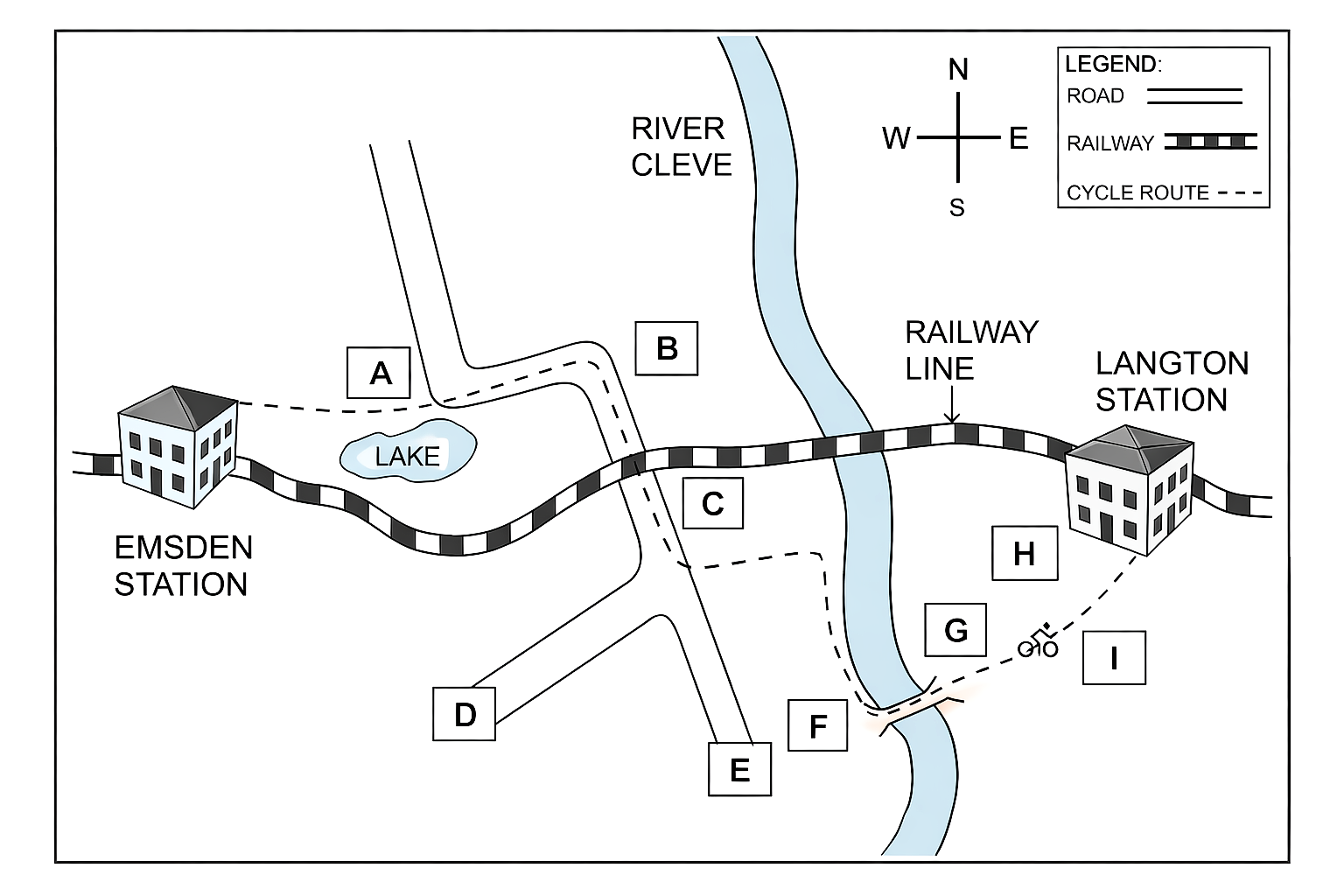
Part 1 You will hear a telephone conversation between a U.K. company representative and a woman who wants to hire a motorhome. First you have some time to look at questions 1 to 5. Hello, Coxhead Motorhomes, Dave Sparrow speaking. Oh, hi. I would like to inquire about renting an RV for a week. I think you call them motorhomes in the U.K.? Yes, we do. Well, we should be able to help you there. So what type were you thinking of? It's just for two of us, me and my husband. Right. The best model for you would be the two-berth-end kitchen. That's the one with the sitting and sleeping area in the middle and the other facilities at the back. Yes, that sounds good. And what sort of price is that? The cost starts at £545 a week, depending on when you want it for. If it's high season, it goes up to £755. And is that all inclusive? There's what we call a damage deposit. That's fully refundable if the vehicle is returned in good condition. That depends on the driver's age. You do have to be at least 21 to drive one of these vehicles. That's OK. I'm 24. Well, in that case, if you're driving the vehicle, the deposit would be £460. It goes down to £250 for drivers of 26 and above. And do I have to pay more if my husband drives as well? No, extra drivers are free. Great. We have to pay a supplement for that in the States. So you've driven one of these before, have you? Yes, but only in America. Oh, that reminds me, about my driving licence. I've got an international one. Is that OK? That's fine. And I just have a few questions about the motorhomes, if that's all right? Go ahead. So, first of all, can you tell me how old your vehicles are on average? They're all less than 30 months, so you're getting a vehicle in peak condition. OK. And I'd prefer an automatic gearbox, if possible. Can you do that? I'm afraid not. They're all manual. Will that be a problem? Oh, I guess I'll be OK. It was just a thought. And also, our customers sometimes ask if they can bring their pets along, so if you wanted to do that, it's fine, as long as you make sure they're properly looked after. Oh, well, that won't apply to us, but it's nice to know. Before you hear the rest of the conversation, you have some time to look at questions 6 to 10. Now, listen and answer questions 6 to 10. And I suppose there are cooking facilities in the motorhome? Yes, there's everything you need for cooking. Like a fridge? Yes, and you've got a built-in microwave, too. And you said it sleeps two, so is that two singles or a double? You can arrange the bed either way. And you've got a CD player. And this year, we've installed a television in every motorhome as well. Right. Well, that might be useful if we have a rainy day. Oh, and what about sat-nav? I don't suppose that's included, is it? Sure. We've had that in all our mobile homes for a few years now. Our customers really appreciate it. Great. Oh, and what about a rack for my bicycle? I'd like to take it along. Yes, we can arrange for that. Now, what happens about electricity? I think we'll probably be staying at campsites most of the time, so presumably, there'll be mains hook-up there. But we're going to a music festival for a couple of days, and I don't think they have hook-up there, so we'll need a generator. It's not included, but we can hire one for you. It'll be £50 for a week. OK. Now, about collection, I know your company's near Salisbury. We'll be coming from London, so what's the best way for us to get to you? We'll be arriving by train. Well, if you want, we can pick you up from the station. The nearest station to us is Greatly. I'm sorry? Greatly. That's spelled G-R-A-T-E-L-E-Y. There's no charge for that. Just let us know when you'll be arriving. So, would you like to go ahead and book a vehicle now? Yes. So, my name is Christy, and my... That is the end of Part 1. You now have one minute to check your answers to Part 1. You now have one minute to check your answers to Part 1. You now have one minute to check your answers to Part 1. You now have one minute to check your answers to Part 1. You now have one minute to check your answers to Part 1. Welcome to our holiday special. Today I'll be talking about a new cycle route in this area called the Amsden Way. It's well sign-posted so you can see exactly where to go, and it's an easy route with no steep hills. It's 35 kilometers long from Amsden to Lowington, and consists partly of cycle paths and partly roads. Let me outline the route briefly, starting at Amsden Railway Station. The first part is a cycle path running eastwards, roughly parallel to the rail track. Almost immediately, the railway curves away and goes around the southern side of a little lake. But the cycle path takes the northern route around the lake. Keep your eyes open for the swans that nest there. The path then joins the road, and the next landmark is a group of massive rocks, which tower over the countryside. You will see them to the east of the road, just before the road goes under the railway. They're very impressive. Soon, you'll come to a fork in the road, where you're going to leave the road and head off toward the river. But if you want to make a detour to Colleen Nature Reserve, go straight on instead of leaving the road here. Continuing along the cycle path, you'll reach the River Cleve. The cycle path follows the river southwards. After a bit, you'll see the Ashington China Factory, which closed in 1962. When you get there, there's a bridge over the river, and you carry on with Langton Forest to the south and Farmland to the north. The route ends at Langton Village, where you'll find a railway station. So you can either catch the train here or cycle back to Amsden. Before you hear the rest of the program, you have some time to look at questions 15 to 20. Now listen and answer questions 15 to 20. One point to remember when you're cycling on the Amsden Way is that you should keep your eyes open for sheep, which occasionally stray onto the cycle path from adjoining fields. So be careful to avoid accidents. The path is well constructed, so it's not affected by wet or muddy conditions. There might be the odd car or tractor when you're cycling on roads, but most traffic has been diverted to the main road that bypasses the whole area. Now a bit more about some of the places you'll see. The starting point, Amsden Station, was quite busy in the early 20th century with services to several major cities. But it was closed in the 1950s. And actually, a small company was set up to turn it into a sort of railway museum, maintaining it in the style of the 1950s. And the station was ready for trains to start using it again earlier this year. It's only used by a few local trains, though. There's a visitor's center at the station, which has a small exhibition about the history of railway transport all over the world, and a facility for hiring bikes if you don't have one of your own. There's also a small shop just across the road from the station that sells refreshments. As I said, you can cycle to Langton and return to Amsden by train, or the other way around because you can take your cycle on the train. There's no need to book. There's plenty of room and no extra charge. However, the service is very limited. And the trains between these two places don't run on weekdays. If you want to see the River Elm, there's a footpath from Amsden station. And you can safely leave your bike in the car park there. Leave yourself plenty of time, though. Going down's easy, but the climb up is very steep. So the walk back up to the top can take quite a while. But it's worth the effort. The scenery is wonderful. And the footpath runs right next to the river, down to a waterfall. Finally, if you'd like to do some more cycling in the area, there are lots of other cycle paths. We'll be talking on the radio about them, and you'll be able to get full details in the Saturday edition of the local paper. The National Cycle Network also has some details on their website, although I have to say they don't have many local ones yet. But that may change. So we'll be telling you more about... That is the end of Section 2. You now have half a minute to check your answers. MSWordDoc Word.Document.8 Now turn to section 3. Section 3. You will hear a student called Bobby talking to his tutor about the research project. First, you have some time to look at questions 21 to 23. Now listen carefully and answer questions 21 to 23. Hi Bobby, go ahead and sit down. Tell me about your research project. Well, I decided to research football and keys for success on a football team. That sounds great. What are the guidelines for the test? Did the teacher talk to you about it in class? No, everything is on a handout that was passed out. It says that the first draft is due at the end of next week and the second and third are due later on in the month. I don't understand why we have to keep revising and fixing it. Is this assignment really that important? Well, this project is a major requirement for passing 11th grade English and will go on your permanent record. Oh really? Does that mean it will affect what English level I am placed in next year? Well, not exactly. You need a good grade to move on, but it is your overall grade and teacher recommendation that determines what level of English you are placed in next year. Anyway, tell me about your topic choice. Do you play football? Well, actually it's because my father loves the sport. He watches it every weekend. Cool. It's a good idea to report on something you're interested in. Before you hear the rest of the talk, you have some time to look at questions 24 to 30. Now, listen carefully and answer questions 24 to 30. I see you worked hard calling players and the head coach to talk, so let's see what information you got. Well, you have to listen carefully to the first call on the recording. It's really hard to hear because the background noise is too loud. Listen carefully to the first call on the recording. It's really hard to hear because the background noise is louder than the person's voice. Yes, it is a bit tough to discern. I'm afraid the player's answer is too short as well. You will have to interview him again and try to get him to give a better answer. OK. I thought that might happen. I will call him again tomorrow. Moving on, let's look back at this question. You asked, It is a great idea for a question, but in an oral interview it is far too complex. I would advise you to break it up into multiple parts to get a better response. I guess you're right. I wouldn't want to have to provide an answer to a question like that. I will simplify it. I found that when I asked players this question, it took too much time because they were struggling to answer the question completely. In fact, this is the question Joe Billings was answering when the tape ran out. He did tend to ramble on all the questions, didn't he? He sure did. I would recommend that when you go back and interview players again that you use a more sophisticated recording device. This recording is spotty, which indicates that the equipment wasn't working consistently. OK. I guess it probably wasn't the best idea to use the sound recorder on my phone. Hey, could you give me some feedback on the content of the report itself? Sure. Let's start by focusing on your topic. While I like that you chose to cover football, it seems inexplicit. The keys for success of a player and team is quite an interesting topic. But what is your thesis? That is to say, what conclusions can you draw from your research? I would suggest coming up with a strong thesis statement and then shaping your report based on that. Is it really too vague? I put a whole lot of facts into it. I list the top ten goal scorers in football history and later on provide statistics for a few of the most famous coaches and their records as coaches. I think that's great that you included these facts, but I think you focus too much on the facts and not enough on connecting these facts to make your point. Ah, I see. OK. So it looks like I have quite a bit of work to do before the deadline. That is the end of Section 3. You now have half a minute to check your answers. Thank you. Section 4 First you have some time to look at questions 31 to 40 on page 8. Thank you. Now listen carefully and answer questions 31 to 40. I'd like to give you a brief overview of a research project I've been working on as part of a team of four. We wanted to get some data on what happens to students after they graduate and also find out how useful they felt their degree course was to them. We focused on graduates from the course in Business Management since this is one of the most popular and long-established courses. We decided to use two different data-gathering methods. We started off by emailing a brief questionnaire to all last year's graduates from that course and then we selected a number of those who had replied and with them we carried out phone interviews. We'd originally intended to use face-to-face interviews but didn't feel that would be practical and in fact we found this method provided a combination of wide coverage and depth which is what we wanted. So, what did we find? Well, I suppose our most surprising finding was just how many graduates had gone on to work towards an additional qualification rather than getting a job immediately. That was 32%, almost a third. Of the rest, a very small proportion were unemployed, just 4% and all the rest were in employment. More than half of them were in the public sector with a sizeable minority in the private sector and a small number in the not-for-profit sector. We were also interested in the attitudes of those who were employed towards their work. The majority said that their expectations had been fulfilled. They were generally satisfied in terms of their salary and also happy with their prospects for career development with very few of them feeling that they were in a dead-end job with no prospects of promotion. For the second main part of our research, we wanted to get some feedback from the graduates on how useful they felt their degree course had been to them. There were really three main skills which the graduates felt they'd gained from doing the course and identified as having been the most valuable to them. They highlighted the fact that they developed the ability to work as members of a team. Another skill which they cited as valuable was that of personal organisation, things like meeting deadlines, time management and so on. And finally, a lot of them said that what they'd learned about approaches to problem-solving had been very useful. We also asked them about which elements of the course had been least valuable to them. To our surprise, the thing that was mentioned most often here was presentations. They hadn't enjoyed having to give these as part of their course, nor had they found it useful having to listen to those given by their fellow students. The reason given for this was that they felt they weren't trained how to do it properly. And the second thing that got very negative feedback was work on essay writing. Most people thought this was unnecessary and that it would have been better to work on report writing. And finally, some respondents said that they would have liked more guidance on the best way to go about looking for a job, that the course could have done more to help them. Finally, we asked if there were any skills... That is the end of Section 4. You now have half a minute to check your answers. That is the end of the listening test. You now have ten minutes to transfer your answers to the listening answer sheet. Thank you. Thank you. Thank you. Thank you. Thank you. Thank you. Thank you. Thank you. Thank you. Thank you. Thank you. Thank you. Thank you. Thank you. Thank you. Thank you. Thank you. Thank you. Thank you. Thank you. Thank you. You have two minutes left. Thank you. Thank you. Thank you. Thank you. Thank you. Thank you. Thank you. Thank you. Thank you. Thank you. You have one minute left. Thank you. Thank you. Thank you. Thank you. Thank you. Thank you. Thank you. Thank you. Thank you. Thank you. Thank you. Please stop writing and wait for your question booklet to be collected.