이 세트에 대하여: 수험생들이 회상한 실제 시험 자료를 모아 정리한 것입니다. IELTS는 전 세계 문제은행에서 출제하므로, 이 자료는 세계적으로 공유됩니다. 완전한 연습용 테스트를 제공하기 위해 비슷한 시기에 보고된 자료를 묶어 구성했으며, 한 번의 시험이 아닌 여러 날짜의 내용이 합쳐질 수 있습니다. 오디오는 연습용으로 재구성되었습니다. 학습 편의를 위해 정리된 자료입니다. 수험생 회상 기반 — 공식 IELTS 자료가 아닙니다.
Reading Passage 1: A Brief History of Humans and Food
During the journey from our hunter-gatherer ancestors to the present day, there have been three seismic changes that have impacted the food we eat: the discovery of cooking, the emergence of agriculture, and the invention of methods of preserving food.
The 19th-century scientist Charles Darwin thought that cooking, after language, was the greatest discovery made by man. All of us eat some raw food, such as fruit and vegetables, but the great majority of food we consume is cooked. Cooking can turn plants that are inedible into edible food by destroying toxic chemicals that plants often manufacture to protect themselves against attack by insects or other herbivorous animals. These toxic chemicals are referred to as “plant secondary compounds” because they are not directly involved in the plant’s normal growth, development, and reproduction, and are produced purely as chemical defenses. They give many of the plants we consume, such as coffee or Brussels sprouts, their bitter taste.
Cooked food is often more digestible because heat breaks down tough cellulose cell walls in plants or tough connective tissue in animals. Chewing raw turnip, a plate of uncooked rice, or a raw leg of lamb is much harder work than eating the cooked equivalent. The energy expended in chewing to break down the tough material is replaced by energy from the fuel used in cooking the food, so the ratio of energy gained to energy expended by the body is greater when food is cooked.
Until the development of agriculture, hunter-gatherers spent up to seven hours a day gathering food. This all began to change around 10,500 years ago with the advent of farming, which led to dramatic changes in human societies. People began to create a variety of new tools to aid survival, and in turn, populations increased in size. These changes led to the possibility of specialization of different tasks within society. Around this time, writing became more sophisticated and allowed people to maintain records of the harvest and taxes. Eventually, formalized structures of government were established as people settled in one area.
The arrival of agriculture meant that, for the first time, our ancestors had more food than they could eat immediately. This, combined with the seasonality of production, led them to discover methods of preserving food: smoking, drying, adding acid by fermentation, or adding salt. These four methods all share one feature in common—they make the food a more hostile environment for bacteria that can cause it to spoil. They also tend to slow down natural chemical reactions in the food that would cause decay.
Although foods today are still preserved in these ancient ways, two more recent methods of preserving food have become more common: canning and freezing. Canning was invented by a Frenchman, Nicolas Appert, in the early 19th century. He sealed food in bottles fabricated from glass and then heated them in boiling water to cook the contents. Appert’s method had great advantages over older methods of food preservation: it could be applied to a wide range of foods, and the flavor and texture were similar to freshly cooked products. His idea was soon copied by an Englishman, Peter Durand. Until this point, containers had been too heavy to be widely used, but Durand produced the first ones which were lightweight and resistant to damage. Two years later, in 1812, two Englishmen, Bryan Donkin and John Hall, started the commercial canning of food, although the real rise in popularity of canning had to wait until the invention of the can opener in 1855. Until then, cans were opened with a chisel and hammer. Canning is an extremely effective way of preserving food: one can containing meat, dating back to 1824, was opened in 1939, and the contents were still in good condition.
In the 21st century, the dominance of canning as a method of food preservation has been overtaken by freezing. Chilling food to keep it fresh is an old idea. The earliest mentions of icehouses, thick-walled buildings, half underground, date back to 1700 BC in northwest Iran. In early 16th-century Italy, water was mixed with chemicals to lower its freezing point to -18 degrees Celsius. Several centuries later, frozen fish and other goods were transported by ship from Australia to England. However, the modern frozen food industry was started in the 1920s by an American, Clarence Birdseye. While on a fishing trip with the Inuit in the Canadian Arctic, Birdseye observed that rapid freezing creates smaller ice crystals and therefore causes less damage to food—a discovery he had not expected. Nevertheless, the major growth in demand for frozen food came with the arrival of freezers in ordinary people’s homes. The advantages of frozen over canned food include the fact that the flavor and consistency are often identical to the fresh product, and freezing can be used to preserve a wide variety of foods.
- 1
According to Darwin, cooking was the most significant development in human history.
- 2
The process of cooking gets rid of some plant poisons.
- 3
Eating cooked food is more energy efficient than eating raw food.
- 4
Clarence Birdseye had previously worked in the Australian food industry.
- 5
Birdseye’s trip with the Inuit confirmed what he already believed about rapid freezing.
- 6
The changes agriculture brought about were: the development of equipment and larger ______.
- 7
The ability to keep ______ as writing developed.
- 8
Early methods of food preservation included: smoking, drying and combining food with acid or ______.
- 9
Nicolas Appert put food into containers made of ______.
- 10
Appert’s method resulted in preserved food that had the same taste and ______ as fresh food.
- 11
Peter Durand introduced cans which had the advantage of being ______ and hard to break.
- 12
In 1855, the metal can opener replaced the ______ which had been used with a hammer to open cans.
- 13
Some food was still found to be edible after more than a hundred years, e.g. an old can of ______.
Reading Passage 2: Movement Underwater
A Self-propelled motion is a fundamental ability in many organisms. From the beating flagella of tiny plankton keeping afloat near the ocean surface to the playful perfection of dolphins surfing the bow wave of a ship, marine creatures have adopted a huge variety of styles, speeds, and methods of movement. Each species has its own particular need for the evolutionary developments that have taken place, but the basic requirements are the same—finding food, avoiding predation, seeking a mate or a safe place to have young, or migrating to an area with more favorable conditions.
B The particular physical properties of water that most affect movement are density, viscosity (stickiness), and buoyancy. Seawater is about 800 times denser than air and nearly 100 times as viscous. Consequently, there is much more resistance to movement than on land, as anyone will know who has ever tried to wade through waist-deep water. However, with density comes much greater buoyancy, so that organisms need to spend relatively little energy to stay afloat. As they move through the ocean environment, organisms seek to make wave motion, currents, and natural turbulence work to their advantage, not to their detriment.
C Most fishes have swim bladders to help them offset the density of their bodies and so maintain neutral buoyancy with minimal effort. These small, gas-filled chambers contain specialized networks of blood vessels that can add or remove gases such as oxygen and carbon dioxide. The ability to remain indefinitely at a constant depth without expending energy is especially important for slow-moving fishes that seek food in the shallows, or for those that hunt and scavenge in kelp forests. Active swimmers, such as mackerel, skipjacks, and sharks, do not have swim bladders because they need to change depth more rapidly than they could regulate the gas content. These fishes must swim forever or they will sink.
D Many animals, especially the tiny zooplankton, have taken to a life of simply drifting near the surface, contentedly feeding on the microscopic phytoplankton and bacteria floating there. Although life among the plankton might seem easy, there is in fact a remarkable range of movement. Some tiny plankton only 1–2 mm in length actually travel long distances each day. Species that live below the level where sunlight reaches nightly swim hundreds of meters up to the surface to feed in the relative safety of darkness. At dawn, they sink back down in an effort to escape predators—a double journey equivalent to a person swimming 700 km a day.
E It has taken marine creatures millions of years of evolution to overcome the chief deterrent to motion through a dense medium such as water—that of drag resistance. Swimming efficiency has been achieved by minimizing the three types of drag created by friction, turbulence, and body form. To reduce surface friction, the body must be smooth and rounded. In addition, the scales of most fishes are coated with slime to lubricate their passage through water. To reduce the turbulent drag created as water flows around the moving shape, a rounded front end and tapered back end are required. To reduce form drag, the cross-sectional area of the body should be minimal—a pencil shape would be ideal. The combined shape, taking into account all three types of drag, is the streamlined torpedo form of a tuna, the fastest-swimming of all fishes.
F Speed is only one of three important aspects of swimming ability. Tuna, swordfish, and mackerel all specialize in fast, steady cruising, but there are many other fishes for whom sustained speed is less important, such as the barracuda. This formidable predator specializes in swift acceleration, and has a far higher success rate for its attacks than its steady-cruising cousins. The freshwater pike, which lurks in the shadows until its quarry is within striking distance and then lunges with great rapidity, achieves a remarkable 70–80 percent success rate. The third specialization is maneuverability, best demonstrated by the butterfly fishes. These have disk-shaped bodies that permit abrupt changes of track. Many fishes are generalists, being at least partly proficient in all three modes of movement.
G Almost all fishes swim by undulation. Strong W-shaped muscles along the side of the body progressively contract and relax in sequence, from head to tail and from side to side, creating a traveling horizontal wave. The body is thrown into a series of curves that press sideways and back against the water, producing a forward thrust. The narrow, elongated forms of eels and sea snakes allow easy undulation along their full length. In contrast, the more stubby and inflexible bodies of armor-plated trunkfish use only the swish of their short tail fins to move themselves through the water. Most other fishes combine elements of both methods, coordinating powerful strokes of the tail fins with subtle body undulations.
H A fish’s fins also play a vital and versatile role. The vertically oriented dorsal and ventral fins on the back and belly control sideways motion, while up-and-down motion is controlled by the pectoral and pelvic fins on the fish’s sides. Whereas the shape of the tail fin relates directly to speed—crescent-moon-shaped for fast cruising, broad and flat for acceleration—the style and arrangement of the other fins are crucial for maneuverability. Puffer fishes scull with tiny, oscillating pectoral fins, while butterfly fishes undulate their broad dorsal and ventral fins, twisting and turning with great precision through intricate coral reefs.
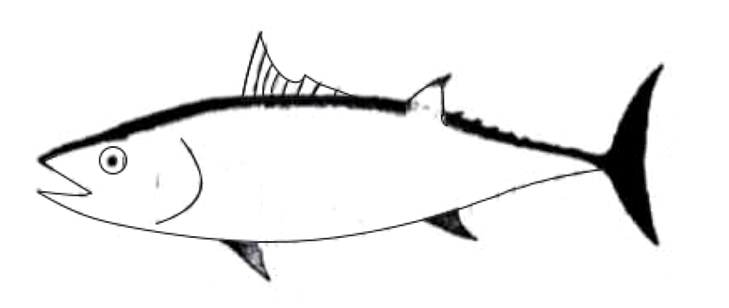
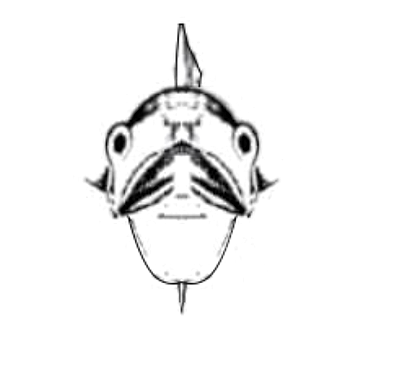
- 14
A strategy to avoid being attacked
- 15
How fish are able to keep afloat naturally
- 16
The physical process by which fish propel themselves ahead
- 17
A list of reasons why different creatures move from one place to another
- 18
How the medium of water both restricts and aids movement
- 19
Ability to maintain the same ________ over long distances (Swordfish)
- 20
Rapid ________ (Barracuda)
- 21
Sudden attack on prey following period of lying in wait (________)
- 22
Rapid changes of direction (________)
- 23
Streamlined shape narrowing towards the rear to reduce ________ drag
- 24
Fins controlling ________ movement (up-and-down or sideways)
- 25
Fins controlling ________ movement (up-and-down or sideways)
- 26
Fins which are important for ________ of fish
- 27
Minimal cross-sectional body area to decrease ________ drag
Reading Passage 3: The Placebo Effect
With the right encouragement, your mind can convince the body to heal itself. What is the mysterious force that can do this?
Want to devise a new form of alternative medical treatment? No problem. Here’s the recipe. As a practitioner, be warm, sympathetic, reassuring and enthusiastic. Your treatment should involve physical contact, and each session with your patients should take at least half an hour. Encourage your patients to take an active part in their treatment and understand how their disorders relate to the rest of their lives. Tell them that their own bodies possess the true power to heal. Get them to pay you well. Describe your treatment in familiar words, but embroidered with a hint of mysticism: energy fields, energy flows, energy blocks, meridians, forces, auras, rhythms and the like. Refer to the knowledge of an earlier age: wisdom carelessly swept aside by the rise of blind mechanistic science. Oh, come off it, you’re saying. Something like that couldn’t possibly work, could it?
Well, yes, it could and often well enough to earn you a living. And a very good living if you are sufficiently convincing or, better still, really believe in your therapy. Many illnesses get better on their own, so if you are lucky and administer your treatment at just the right time you’ll get the credit. But that’s only part of it. Some of the improvement really would be down to you. Not necessarily because you’d recommended ginseng rather than chamomile tea or used this crystal as opposed to that pressure point. Nothing so specific. Your healing power would be the outcome of a paradoxical force that conventional medicine recognizes but remains oddly ambivalent about: the placebo effect.
Placebos are treatments that have no direct effect on the body, yet still work because the patient has faith in their power to heal. Most often the term refers to a dummy pill, but it applies just as much to any device or procedure, from a sticking plaster to a crystal. The existence of the placebo effect implies that even a complete fraud could make a difference to someone’s health, which is why some practitioners of alternative medicine are sensitive about any mention of the subject. In fact, the placebo is a powerful part of all medical care, orthodox or otherwise, though its role is often neglected and misunderstood.
At one level, it should come as no surprise that our state of mind can influence our physiology: anger opens the superficial blood vessels of the face; sadness pumps the tear glands. But exactly how placebos work their medical magic is still largely unknown. Most of the scant research to date has focused on the control of pain, because it’s one of the commonest complaints and lends itself to experimental study. Here, attention has turned to the endorphins, natural substances produced in the brain that are known to help control pain. Any of the neurochemicals involved in transmitting pain impulses or modulating them might also be involved in generating the placebo response, says Don Price, an oral surgeon at the University of Florida.
That case has been strengthened by the recent work of Fabrizio Benedetti of the University of Turin, who showed that the placebo effect can be abolished by a drug, naloxone, which blocks the effects of endorphins. Benedetti induced pain in a pressure cuff on the forearm. He did this several times a day for several days, using morphine each time to control the pain. On the final day, without saying anything, he replaced the morphine with a saline solution. This still relieved the subjects’ pain: a placebo effect. But when he added naloxone to the saline, and blocked the endorphins, the pain relief disappeared. Here was direct proof that the relief of pain by a placebo is carried out, at least in part, by these natural opiates.
Though scientists don’t know exactly how placebos work, they have accumulated a fair bit of knowledge about how to trigger the effect. A London rheumatologist found, for example, that red dummy capsules made more effective painkillers than blue, green or yellow ones. Research on American students revealed that blue pills make better tranquillisers than pink, a colour more suitable for stimulants. Even branding can make a difference: if Aspro or Tylenol are what you like to take for a headache; their chemically identical generic equivalents may be less effective.
It matters too how the treatment is delivered. Decades ago, when the major tranquilliser chlorpromazine was being introduced, a doctor in Kansas categorised his colleagues according to whether they were keen on it, openly sceptical of its benefits, or took a let’s-try-and-see attitude. His conclusion: the more enthusiastic the doctor, the better the drug performed. A recent survey by Ernst on doctors’ bedside manners turned up one consistent finding: physicians who adopt a warm, friendly, reassuring manner are more effective than those whose consultations are formal and do not offer reassurance.
Warm, friendly and reassuring are precisely what alternative treatment is all about, of course. Many of the ingredients of that opening recipe — the physical contact, the generous swaths of time, the strong hints of supernormal healing power — are just the kind of thing likely to impress patients. It’s hardly surprising then, that complementary practitioners are generally best at mobilising the placebo effect, says Arthur Kleinman, professor of social anthropology at Harvard University.
- 28
27 An appointment with an alternative practitioner
- A. should be easy to understand
- B. can improve without treatment
- C. can cost the patient less
- D. ought to last a minimum length of time
- E. can require a range of different products
- F. can be described as serious
- G. should give it greater recognition
- H. should be able to get a high income
- 29
28 An alternative practitioner’s explanation of their treatment
- A. should be easy to understand
- B. can improve without treatment
- C. can cost the patient less
- D. ought to last a minimum length of time
- E. can require a range of different products
- F. can be described as serious
- G. should give it greater recognition
- H. should be able to get a high income
- 30
29 If alternative practitioners have faith in their treatment, they
- A. should be easy to understand
- B. can improve without treatment
- C. can cost the patient less
- D. ought to last a minimum length of time
- E. can require a range of different products
- F. can be described as serious
- G. should give it greater recognition
- H. should be able to get a high income
- 31
30 Quite often, a patient’s illness
- A. should be easy to understand
- B. can improve without treatment
- C. can cost the patient less
- D. ought to last a minimum length of time
- E. can require a range of different products
- F. can be described as serious
- G. should give it greater recognition
- H. should be able to get a high income
- 32
31 Conventional doctors are aware of the placebo effect and they
- A. should be easy to understand
- B. can improve without treatment
- C. can cost the patient less
- D. ought to last a minimum length of time
- E. can require a range of different products
- F. can be described as serious
- G. should give it greater recognition
- H. should be able to get a high income
- 33
32 In the third paragraph, the writer says that the placebo effect
- A. works best in tablet form.
- B. is a new type of medical treatment.
- C. is trusted more by some patients than by others.
- D. has a significant role in both alternative and conventional medicine.
- 34
33 A reference is made to anger and sadness in order to show that
- A. personal feelings can alter our physical condition.
- B. some human behaviour has no clear explanation.
- C. placebos, like emotions, are experienced by everyone.
- D. people find some physical reactions hard to control.
- 35
34 Research on pain control attracts most of the attention because
- A. Only a limited amount of research has been conducted so far.
- B. Scientists have discovered that endorphins can help to reduce pain.
- C. Pain-reducing agents might also be involved in the placebo effect.
- D. Patients often experience pain and like to complain about it.
- 36
35 Scientists now have enough information to understand how the placebo effect becomes active in people.
- 37
36 As a result of experiments, some painkillers have been taken off the market.
- 38
37 Individual preference can have an impact on the effectiveness of different brands of headache tablets.
- 39
38 Doctors expressed a range of views on the drug chlorpromazine when it was first introduced.
- 40
39 Ernst’s study had a big influence on doctors’ behaviour with patients.
- 41
40 Alternative practitioners work in a way that is likely to trigger the placebo effect.
정답 보기