Listening 2025-09 Test 1

ماه آزمون: 2025-09

بر اساس خاطرات شرکت‌کنندگان بازسازی شده — محتوای رسمی IELTS نیست. فایل صوتی و متن‌ها برای تمرین بازسازی شده‌اند.

فایل صوتی بازسازی‌شده

SECTION 1

Complete the notes below. Write NO MORE THAN THREE WORDS AND/OR A NUMBER for each answer.

NOTES ON SOCIAL PROGRAMME Example Number of trips per month Answer 5 Visit places which have: • historical interest • good 1. __________ • 2. __________ Cost: between 5.00 pounds and 15.00 pounds per person Note: special trips organised for groups of 3. __________ people Time: departure - 8.30 a.m. and return - 6.00 p.m. To reserve a seat: sign name on the 4. __________ 3 days in advance
  1. 1

    good 1. __________

  2. 2

    • 2. __________

  3. 3

    groups of 3. __________ people

  4. 4

    sign name on the 4. __________ 3 days in advance

بخش 2

Complete the table below. Write NO MORE THAN THREE WORDS AND/OR A NUMBER for each answer.

WEEKEND TRIPS Place Date Number of seats Optional extra St Ives 5. __________ 16 Hepworth Museum London 16th February 45 6. __________ 7. __________ 3rd March 18 S.S. Great Britain Salisbury 18th March 50 Stonehenge Bath 23rd March 16 8. __________
  1. 5

    St Ives 5. __________ 16 Hepworth Museum

  2. 6

    London 16th February 45 6. __________

  3. 7

    7. __________ 3rd March 18 S.S. Great Britain

  4. 8

    Bath 23rd March 16 8. __________

بخش 3

For further information: Read the 9. __________ or see Social Assistant: Jane 10. __________

  1. 9

    Read the 9. __________

  2. 10

    see Social Assistant: Jane 10. __________

SECTION 2

Complete the sentences below. Write NO MORE THAN TWO WORDS AND/OR A NUMBER for each answer.

  1. 11

    Riverside Village was a good place to start an industry because it had water, raw materials and fuels such as ___________ and ___________ .

  2. 12

    The metal industry was established at Riverside Village by ___________ who lived in the area.

  3. 13

    There were over ___________ water-powered mills in the area in the eighteenth century.

بخش 5

Label the plan below. Write NO MORE THAN TWO WORDS for each answer.
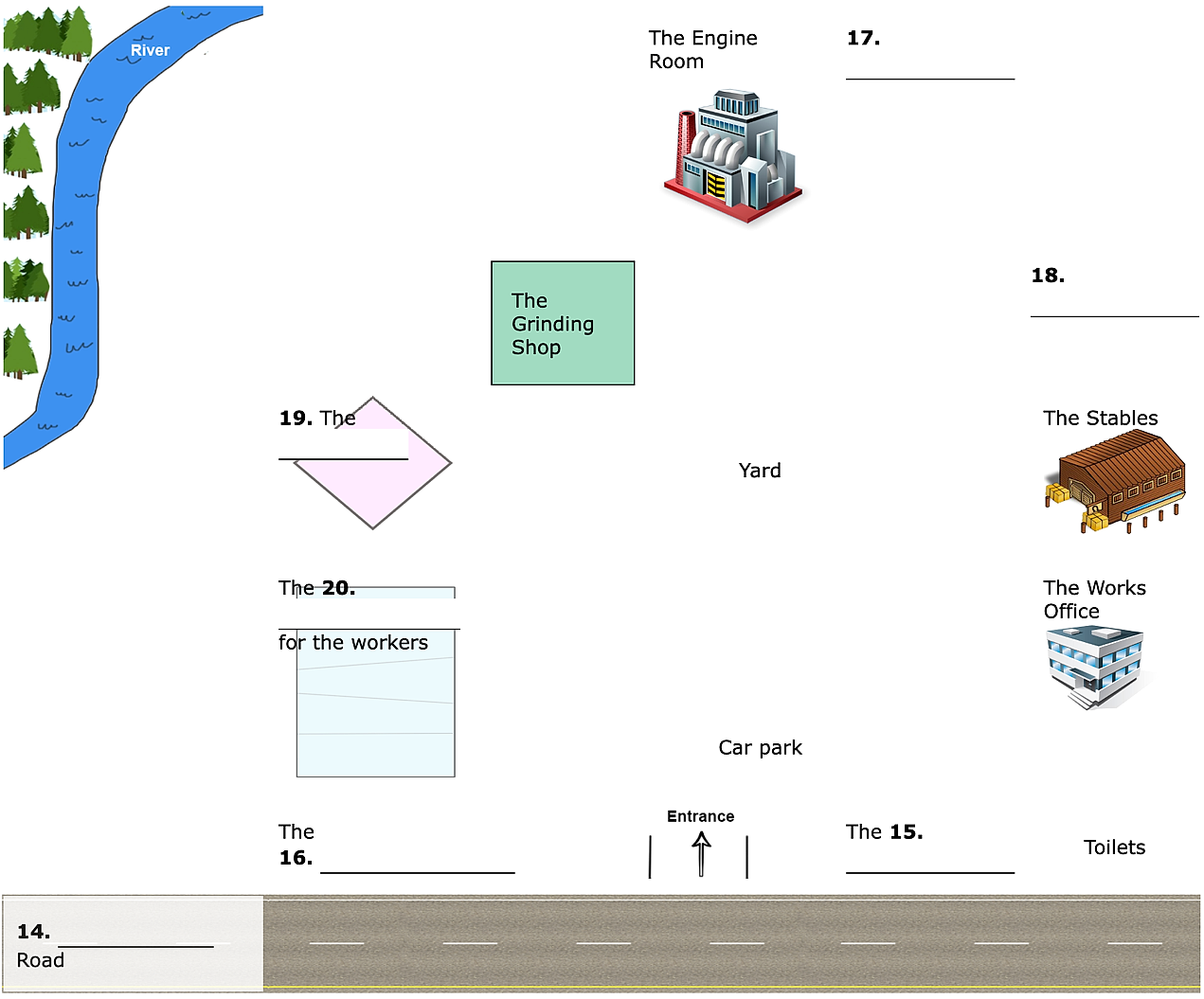
Recreated diagram for questions 14, 15, 16, 17, 18, 19, 20
  1. 14

    14.

  2. 15

    15.

  3. 16

    16.

  4. 17

    17.

  5. 18

    18.

  6. 19

    19.

  7. 20

    20.

SECTION 3

Choose the correct letter, A, B or C.

  1. 21

    Melanie says she has not started the assignment because

    • A. she was doing work for another course.
    • B. it was a really big assignment.
    • C. she hasn't spent time in the library.
  2. 22

    The lecturer says that reasonable excuses for extensions are

    • A. planning problems.
    • B. problems with assignment deadlines.
    • C. personal illness or accident.

بخش 7

What recommendations does Dr Johnson make about the journal articles? Choose your answers from the box and write the letters A-G next to questions 23-27

Jackson: 23. ___________ Roberts: 24. ___________ Morris: 25. ___________ Cooper: 26. ___________ Forster: 27. ___________
  1. 23

    Jackson

  2. 24

    Roberts

  3. 25

    Morris

  4. 26

    Cooper

  5. 27

    Forster

بخش 8

Label the chart below. Choose your answers from the box below and write the letters A-H next to questions 28-30.
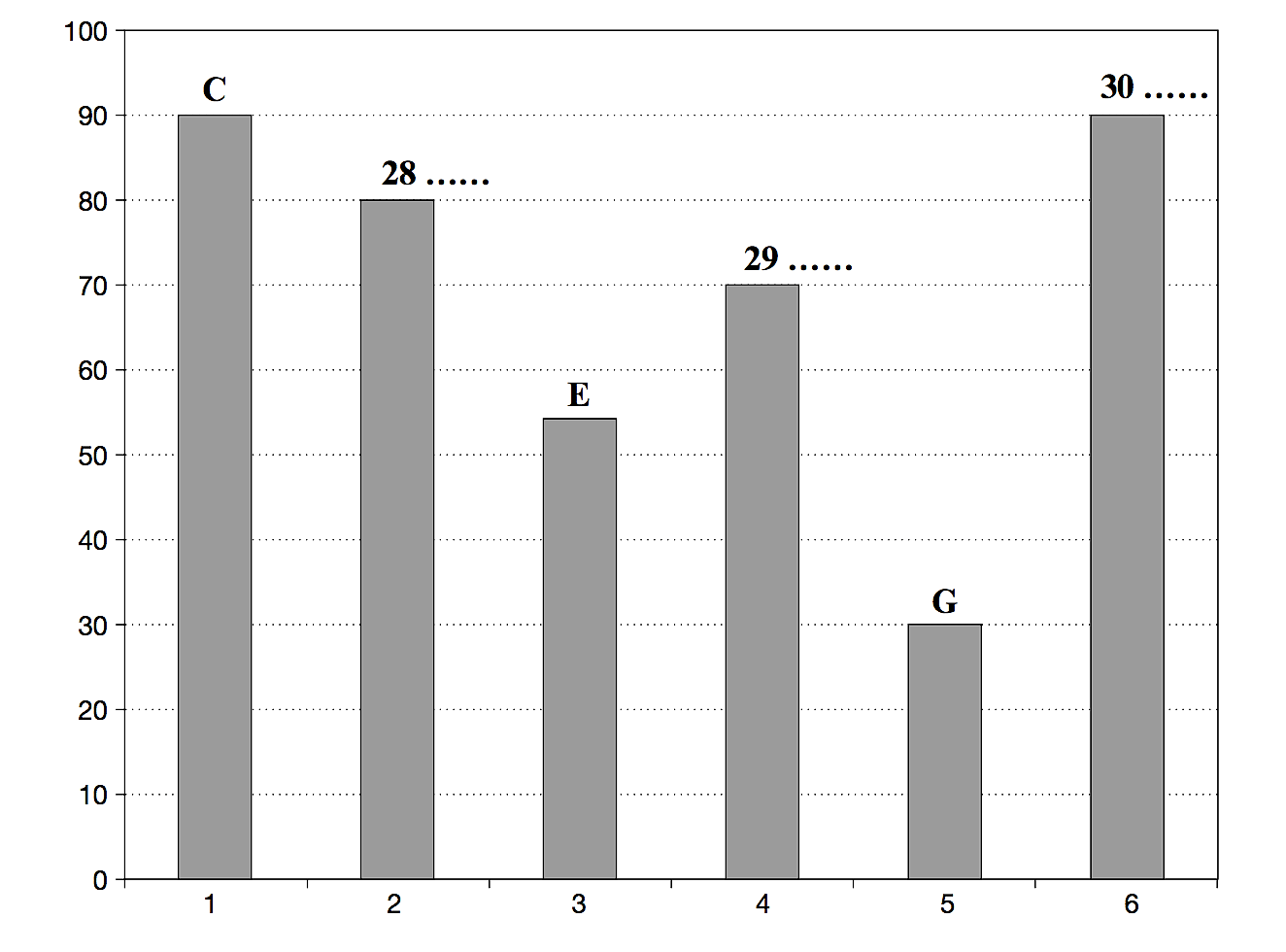
Population studies. Reasons for changing accommodation. Possible reasons A uncooperative landlord B environment C space D noisy neighbours E near city F work location G transport H rent
Recreated diagram for questions 28, 29, 30
  1. 28

    28.

    • A. uncooperative landlord
    • B. environment
    • C. space
    • D. noisy neighbours
    • E. near city
    • F. work location
    • G. transport
    • H. rent
  2. 29

    29.

    • A. uncooperative landlord
    • B. environment
    • C. space
    • D. noisy neighbours
    • E. near city
    • F. work location
    • G. transport
    • H. rent
  3. 30

    30.

    • A. uncooperative landlord
    • B. environment
    • C. space
    • D. noisy neighbours
    • E. near city
    • F. work location
    • G. transport
    • H. rent

SECTION 4

Complete the notes below. Write NO MORE THAN TWO WORDS for each answer.

THE URBAN LANDSCAPE Two areas of focus: l the effect of vegetation on the urban climate l ways of planning our 31. __________ better Large-scale impact of trees: l they can make cities more or less 32. __________ l in summer they can make cities cooler l they can make inland cities more 33. __________ Local impact of trees: l they can make local areas n more 34. __________ n cooler n more humid n less windy n less 35. __________ Comparing trees and buildings Temperature regulation: l trees evaporate water through their 36. __________ l building surfaces may reach high temperatures Wind force: l tall buildings cause more wind at 37. __________level l trees 38. __________ the wind force Noise: l trees have a small effect on traffic noise l 39. __________ frequency noise passes through trees Important points to consider: l trees require a lot of sunlight, water and 40. __________ to grow
  1. 31

    ways of planning our 31. __________ better

  2. 32

    they can make cities more or less 32. __________

  3. 33

    they can make inland cities more 33. __________

  4. 34

    n more 34. __________

  5. 35

    n less 35. __________

  6. 36

    trees evaporate water through their 36. __________

  7. 37

    tall buildings cause more wind at 37. __________level

  8. 38

    trees 38. __________ the wind force

  9. 39

    39. __________ frequency noise passes through trees

  10. 40

    trees require a lot of sunlight, water and 40. __________ to grow

برگه پاسخ

در حین حل کردن پر کنید — بررسی پاسخ‌ها فوری و فقط روی همین دستگاه انجام می‌شود و هر اشتباه در لیست اشتباهات شما با درس مربوطه ذخیره می‌شود.

  1. 1.
  2. 2.
  3. 3.
  4. 4.
  5. 5.
  6. 6.
  7. 7.
  8. 8.
  9. 9.
  10. 10.
  11. 11.
  12. 12.
  13. 13.
  14. 14.
  15. 15.
  16. 16.
  17. 17.
  18. 18.
  19. 19.
  20. 20.
  21. 21.
  22. 22.
  23. 23.
  24. 24.
  25. 25.
  26. 26.
  27. 27.
  28. 28.
  29. 29.
  30. 30.
  31. 31.
  32. 32.
  33. 33.
  34. 34.
  35. 35.
  36. 36.
  37. 37.
  38. 38.
  39. 39.
  40. 40.
روی همین دستگاه ذخیره می‌شود — نیازی به حساب کاربری نیست. اگر می‌خواهید پیشرفتتان را در دستگاه‌های دیگر داشته باشید، وارد صفحه پیشرفت خود شوید.
نمایش متن صوتی
You'll hear a number of different recordings and you'll have to answer questions on what you hear. There will be time for you to read the instructions and questions, and you'll have a chance to check your work. All the recordings will be played once only. The test is in four sections. At the end of the test, you'll be given ten minutes to transfer your answers to an answer sheet. Now turn to section one. Section one. You'll hear a young student asking the social organiser of his school for information about organised trips. First, you have some time to look at questions one to four. You'll see that there is an example which has been done for you. On this occasion only, the conversation relating to this will be played first. Good morning. Good morning. How can I help you? I understand that the school organises trips to different... Yes, we run five every month. Three during weekends and two Wednesday afternoon trips. There are five trips every month, so five has been written in the notes. Now we shall begin. You should answer the questions as you listen because you will not hear the recording a second time. Listen carefully and answer questions one to four. Good morning. Good morning. How can I help you? I understand that the school organises trips to different... Yes, we run five every month. Three during weekends and two Wednesday afternoon trips. What sort of places? Well, obviously it varies, but always places of historical interest and also which offer a variety of shopping because our students always ask about that. And then we go for ones where we know there are guided tours because this gives a good focus for the visit. Do you travel far? Well, we're lucky here, obviously, because we're able to say that all our visits are less than three hours' drive. How much do they cost? Again, it varies. Between five and fifteen pounds a head, depending on distance. Oh, and we do offer to arrange special trips if, you know, there are more than twelve people. Oh, right. I'll keep that in mind. And what are the times normally? We try to keep it pretty fixed so that students get to know the pattern. We leave at 8.30am and return at 6pm. We figure it's best to keep the day fairly short. Oh, yes. And how do we reserve a place? You sign your name on the notice board. Do you know where it is? Aha, I saw it this morning. And we do ask that you sign up three days in advance so we know we've got enough people interested to run it and we can cancel if necessary – with full refund, of course. That's fine, thanks. Before you hear the rest of the conversation, you have some time to look at questions five to ten. Now listen and answer questions five to ten. And what visits are planned for this term? Right, well, I'm afraid the schedule hasn't been printed out yet, but we have confirmed the dates and planned the optional extra visits, which you can also book in advance if you want to. Oh, that's all right. And if you can just give some idea of the weekend ones so I can, you know, work out when to see friends, etc. Oh, sure. Well, the first one is St Ives, that's on the 13th of February and we'll have only 16 places available because we're going by minibus. And that's a day in town with the optional extra of visiting the Hepworth Museum. All right, yeah, that sounds good. Then there's a London trip on the 16th of February and we'll be taking a medium-sized coach so there'll be 45 places on that. And let's see, the optional extra is the Tower of London. Oh, I've already been there. After that there's Bristol on the 3rd of March. Where? Bristol. B-r-i-s-t-o-l. OK. That's in a different minibus with 18 places available. Oh, and the optional extra is a visit to the SS Great Britain. OK. We're going to Salisbury on the 18th of March and that's always a popular one because the optional extra is Stonehenge. So we're taking the large coach with 50 seats. Oh, good. And then the last one is to Bath on the 23rd of March. Oh, yes. Is Bath the Roman city? Yes, that's right, and that's in the 16-seater minibus. And where's the optional visit? It's to the American Museum. Well worth a visit. OK, well, that's great. Thanks for all that. My pleasure. By the way, if you want more information about any of the trips, have a look in the student newspaper. OK. Or have a word with my assistant. Her name is Jane Yentob. That's Y-E-N-T-O-B. Right. I've got that. Thank you very much for all your help. You're very welcome. I hope you enjoy the trips. That is the end of Section 1. You now have half a minute to check your answers. Now turn to Section 2. Thank you. Section 2. You'll hear a tour guide giving a talk about a museum centre called Riverside Industrial Village. First, you have some time to look at questions 11 to 13. Now listen carefully and answer questions 11 to 13. Good afternoon, everybody, and welcome to Riverside Industrial Village. To start your visit, I'm just going to give you a brief account of the history of the museum before letting you roam about on your own. I won't keep you long, OK? Now, from where we're standing, you've got a good view of the river over there. And it was because of this fast-flowing water that this site was a natural place for manufacturing works. The water and the availability of raw materials in the area, like minerals and iron ore, and also the abundance of local fuels like coal and firewood, all made this site suitable for industry from a very early time. Water was the main source of power for the early industries, and some of the waterwheels were first established in the 12th century, would you believe. At that time, local craftsmen first built an iron forge just behind the village here on the bend in the river. By the 17th and 18th centuries, the region's rivers supported more than 160 water mills, and many of these continued to operate well into the 19th century. But then the steam engine was invented, and then the railways came, and the centres of industry were able to move away from the rivers and the countryside and into the towns. So industrial villages like this one became very rare. So, that's the history for you. If you'd like any more information, you can ask me some questions, or you can read further in our excellent guidebook. Before you hear the rest of the talk, you have some time to look at questions 14 to 20. Now listen and answer questions 14 to 20. Now, I'm going to give you a plan of the site, and I'd just like to point out where everything is, and then you can take a look at everything for yourself. I've already pointed out the river, which is on the left, and, of course, I've also pointed out the river which is on the right, which is on the left. I've already pointed out the river, which is on the left, and, of course, running along the bottom is Woodside Road. Got it? OK, now, we're standing at the entrance. See it at the bottom? And immediately to our right is the ticket office. You won't need that because you've got your group booking, but just past it are the toilets. Always good to know where they are. In front of us is the car park, as you can see, and to the left, by the entry gate, is the gift shop. That's where you can get copies of the guide, like this one here. Now, beyond the car park, all the buildings are arranged in a half circle with a yard in the middle. The big stone building at the top is the main workshop. That's where the furnace is and where all the metal was smelted and the tools were cast, as you'll be able to see. Now, in the top right-hand corner, that building with bigger windows is the showroom, where samples of all the tools that were made through the ages are on display. In the top left corner is the grinding shop, where the tools were sharpened and finished. And on one side of that, you can see the engine room, and on the other is the cafe, which isn't an antique, you'll be pleased to know, though they do serve very nice old-fashioned teas. The row of buildings you can see on the left are the cottages. These were built for the workers towards the end of the 18th century and they're still furnished from that period, so you can get a good idea of ordinary people's living conditions. Across the yard from them, you can see the stables, where the horses were kept for transporting the products. And the separate building in front of them is the works office, and that still has some of the old accounts on display. Right, if anyone wants a guided tour, then I'm starting at the engine room. If you'd like to come along this way, please, ladies and gentlemen. That is the end of Section 2. You now have half a minute to check your answers. Now turn to Section 3. . . . . . . . . . . . . . . . . . . . . . Section 3. You'll hear Melanie, a student, talking to one of her lecturers about her studies... First, you have some time to look at questions 21 to 27. Now listen carefully and answer questions 21 to 27. Excuse me, Dr. Johnson. May I speak to you for a minute? Sure. Come in. I'm Melanie Griffin. I'm taking your course in population studies. Right. Well, Melanie, how can I help you? I'm having a bit of trouble with a second assignment, and it's due in 12 days. What sort of trouble are you having? Is the assignment question a problem? Well, that's part of the problem. I'm also having... I've been having trouble getting hold of the books. I've been to the library several times, and all the books are out. Sounds like you should have started borrowing books a bit earlier. Well, I had a really big assignment due in for another course, and I've been spending all my time on that, and I thought... You might get an extension of time to finish your assignment for me? Well, if that's possible, but I don't know if... Well, yes, it is possible, but extensions are normally given only for medical or compassionate reasons. Otherwise, it's really a question of organizing your study, and we don't like giving extensions to students who simply didn't plan their work properly. What did you get for your first assignment? I got 87%. Yes, you did very well indeed. So, obviously, you can produce good work. I don't think I'll need too much extra time, as long as I can get hold of some of the important references. Well, since you did so well in your first assignment, I'm prepared to give you an extra two weeks for this one. So, that'll mean you'll need to submit it about a month from now. Oh, thank you. Now, what about the reading materials? Have you checked out the journal articles in the list? Um, no, not yet. There were about 20 of them, and I wasn't sure which ones would be most useful or important. Well, they're all useful, but I don't expect anyone to read them all, because a number of them deal with the same issues. Let me give you some suggestions. The article by Anderson and Hawker is really worth reading. Right, I'll read that one. You should also read the article by Jackson, but just look at the part on the research methodology, how they did it. OK, Jackson, got that. And if you have time, the one by Roberts says very relevant things, although it's not essential. So, OK, if it's useful, I'll try and read that one. No, the one by Morris. I wouldn't bother with that at this stage if I were you. OK, I won't bother with Morris. Oh, now, someone told me the article by Cooper is important. Well, yes, in a way. But just look at the last part, where he discusses the research results. And lastly, there's Forster. I can't think why I included that one. It's not bad, and could be of some help, but not that much. Before you hear the rest of the conversation, you have some time to look at questions 28 to 30. Now listen and answer questions 28 to 30. Now let's deal with the assignment question. What's the problem there? It's the graph on page 2. What seems to be the problem? It's just the bar graph showing reasons why people change where they live. Well, I've got a photocopy, but the reasons at the bottom are missing. Ah, OK. Look at the first bar on the graph. Now that indicates the number of people who move because they want more space. Oh, I see. Bar 1. OK, now what about the next bar? Bar 2 is to do with the people living nearby disturbing them, so they chose to move away to somewhere quieter. Now let's look at bar number 3. Another reason people change their place of living is because they want to be closer to the city. OK. Proximity to the city is an issue. Now, bar number 4 refers to problems when the owner of the property won't help fix things that go wrong. In other words, the owner is not helpful, and so the tenants move out. OK. Now what about bar 5? Bar 5 is about those people who move because they need a bus or train to get them into the city or to go to work. OK. And bar 6? Bar number 6 is interesting. That reason was given quite a lot. People moving because they wanted to be in a more attractive neighbourhood. Oh, yes. Thank you very much. That is the end of Section 3. You now have half a minute to check your answers. Now turn to Section 4. Thank you. . . . . . . . . . . . . . . . . . . . . . . . . . . . . . . . . . . . . . . . . . . . . . . . . . . . . . . . . . . . . . . . . . . . . . . . . . . . . . . . . . . . . . . . . . . . . . . . . . .
نمایش پاسخ‌نامه

پاسخ‌نامه

  1. 1. Shopping

    The answer is 'Shopping' because the context is about a 'good' activity, and shopping is commonly considered enjoyable or beneficial in such lists.

  2. 2. Guided tours

    The answer is 'Guided tours' because the bullet point suggests a type of activity or service, and guided tours are a typical offering in travel or campus contexts.

  3. 3. More than 12

    The answer is 'More than 12' because the phrase 'groups of ___ people' asks for a number, and 'more than 12' fits as a group size limit or requirement.

  4. 4. Notice board

    The answer is 'Notice board' because people are often asked to sign up for activities in advance on a notice board.

  5. 5. 13th February

    The answer is '13th February' because the format is 'St Ives ___ 16 Hepworth Museum,' and the date matches the event.

  6. 6. Tower of London

    The answer is 'Tower of London' because the format 'London 16th February 45 ___' suggests a famous London site, and the Tower of London fits.

  7. 7. Bristol

    The answer is 'Bristol' because the format '___ 3rd March 18 S.S. Great Britain' points to a city, and the S.S. Great Britain is located in Bristol.

  8. 8. American museum

    The answer is 'American museum' because 'Bath 23rd March 16 ___' refers to a place to visit in Bath, and the American Museum is a known attraction there.

  9. 9. student newspaper

    The answer is 'student newspaper' because the instruction 'Read the ___' is commonly followed by 'student newspaper' in academic contexts.

  10. 10. Yentob

    The answer is 'Yentob' because 'see Social Assistant: Jane ___' asks for a surname, and 'Yentob' completes the name.

  11. 11. Coal / firewood

    The answer is 'Coal / firewood' because the question asks for fuels, and coal and firewood are typical fuels used in early industries.

  12. 12. Local craftsmen

    The answer is 'Local craftsmen' because the question asks who established the metal industry, and local craftsmen are the people who would have done this.

  13. 13. 160

    The answer is '160' because the question asks for the number of water-powered mills, and 'over 160' fits the blank.

  14. 14. Woodside

    The answer is 'Woodside' because it is likely a location or stop relevant to the context.

  15. 15. Ticket office

    The answer is 'Ticket office' because it is a common facility or location in public places or museums.

  16. 16. Gift shop

    The answer is 'Gift shop' because it is a typical feature in museums or tourist attractions.

  17. 17. Workshop

    The answer is 'Workshop' because it fits as a place or facility in an industrial or museum setting.

  18. 18. Showroom

    The answer is 'Showroom' because it is a place where products or exhibits are displayed.

  19. 19. Cafe

    The answer is 'Cafe' because it is a common facility for visitors.

  20. 20. Cottages

    The answer is 'Cottages' because it fits as a type of building or accommodation in a village or museum context.

  21. 21. A

    The answer is A because Melanie says she has not started the assignment as she was doing work for another course, not because it was big or she hadn't been to the library.

  22. 22. C

    The answer is C because the lecturer says reasonable excuses for extensions are personal illness or accident, not planning problems or deadline clashes.

  23. 23. E

    The answer is E because Jackson matches with E in the list provided.

  24. 24. B

    The answer is B because Roberts matches with B in the list provided.

  25. 25. G

    The answer is G because Morris matches with G in the list provided.

  26. 26. F

    The answer is F because Cooper matches with F in the list provided.

  27. 27. C

    The answer is C because Forster matches with C in the list provided.

  28. 28. D

    The answer is D because the main problem is 'noisy neighbours,' not space or rent; 'noisy neighbours' directly matches the issue described.

  29. 29. A

    The answer is A because the main problem is an 'uncooperative landlord,' not environment or transport; this directly matches the issue described.

  30. 30. B

    The answer is B because the main problem is 'environment,' not rent or space; this matches the issue described.

  31. 31. Cities

    The answer is 'Cities' because the phrase is 'ways of planning our ___ better,' and 'cities' fits as something that can be planned.

  32. 32. Windy

    The answer is 'Windy' because the sentence is about making cities more or less something, and 'windy' is an effect of city design.

  33. 33. Humid

    The answer is 'Humid' because the sentence is about making inland cities more something, and 'humid' fits as a climate effect.

  34. 34. Shady

    The answer is 'Shady' because the sentence is about making something more, and 'shady' fits as a positive effect of trees.

  35. 35. Dangerous

    The answer is 'Dangerous' because the sentence is about making something less, and 'dangerous' fits as a negative effect to reduce.

  36. 36. Leaves

    The answer is 'Leaves' because trees evaporate water through their leaves.

  37. 37. Ground

    The answer is 'Ground' because tall buildings cause more wind at ground level.

  38. 38. Filter

    The answer is 'Filter' because trees filter the wind force.

  39. 39. Low

    The answer is 'Low' because low frequency noise passes through trees.

  40. 40. Room

    The answer is 'Room' because trees require a lot of sunlight, water, and room to grow.